

Edible seaweed has fed coastal communities for thousands of years. This guide to kombu, dulse, nori and more, describes what they taste like, how they are grown and processed and why we should be eating more of them.
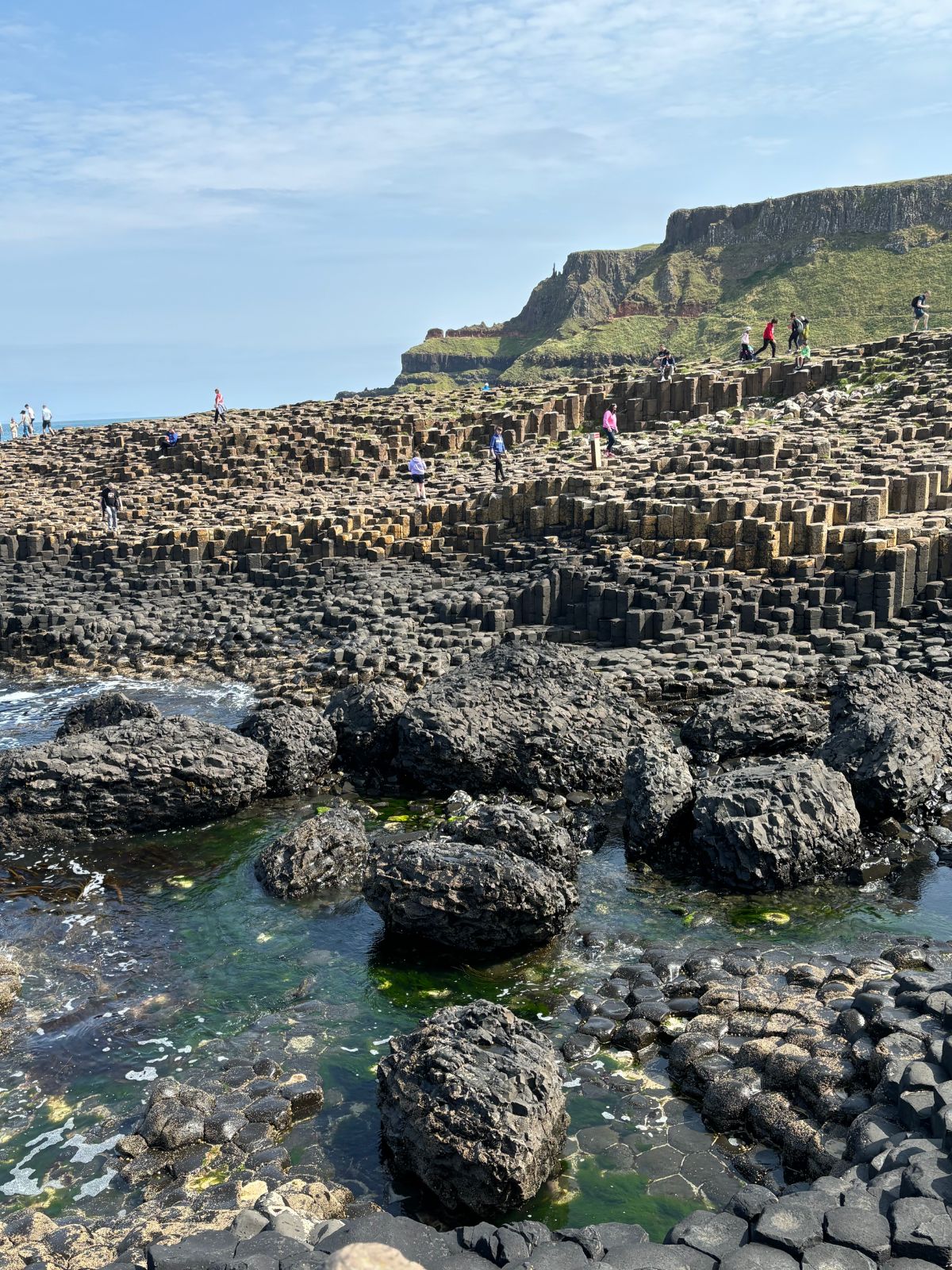
It is the early morning golden hour. The tide has just finished pulling back from the Galloway coast, and the air smells salty, slightly grassy, faintly sweet.
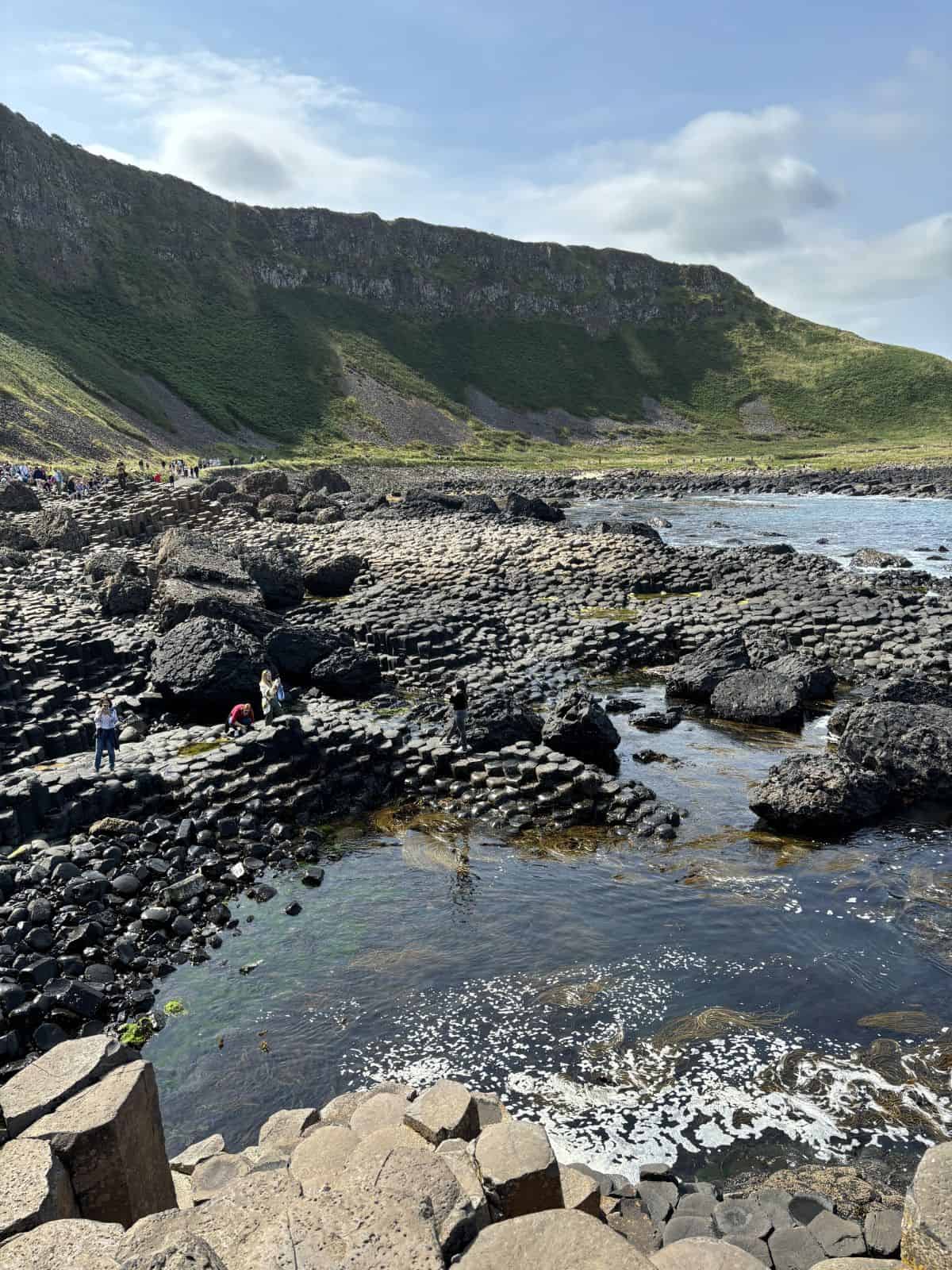
An old man is crouched over a rockpool, knife in hand, working a dark leathery frond free from a boulder as the small waves continue to recede. He could easily pull out the entire frond, as he has watched excited tourists do, but he has spent his whole life living by the coast foraging for seaweed and has acquired a deep understanding of the sea and its secrets. With one hand grasping the frond, he slowly and skilfully cuts close to the base leaving the holdfast clinging to the rock so the algae can grow back and he may return for another harvest. By lunchtime his small cutting will be curling and crackling in a hot pan and will taste very much like bacon.
"It is a simple and nutritious ingredient," the old man writes to his grandchildren in the city when they ask what he eats for lunch in his tiny coastal village. "It requires no irrigation, no fertiliser and no greenhouse; simply rocks, cold seawater and sunlight. It's about as old a way of gathering food as humans have ever come up with and it might also be one of the more useful ones we've forgotten."
The old man is not wrong...
The coastal communities of Japan, Ireland, Chile and the Pacific Northwest have carefully harvested seaweed from their shorelines for thousands of years, but then the West forgot it and now seaweed is being seen in a new light.
Jump to:
- Seaweed: Japan
- Seaweed: Chile
- Seaweed: Europe
- Is seaweed on an upward trend?
- Some noteworthy chefs using seaweed
- Three categories: thousands of species
- Comparison of common seaweeds.
- Popular varieties: Kombu, Dulse and Nori
- What does seaweed taste like?
- Seaweed myths
- Tide to table: how seaweed is produced
- An important plant source of iodine
- Sustainability and environmental concerns
- Are any seaweeds poisonous?
- A checklist for foraging
- Two easy seaweed recipes
- So, should we be eating more seaweed?
- FAQs
- Reviews
Seaweed: Japan
In Japan seaweed has been continuously harvested over the centuries, being deeply woven into daily culinary culture, religious Shinto rituals and even historical tax payments. Seaweed can be traced back to the Jōmon period (around 14,000BCE - 300 BCE), where ancient pottery remnants show that it was already a staple. Over the years, generations of cooks became thoroughly skilled at extracting its delicious umami flavours from many varieties.
Seaweed also holds significant religious importance in Shinto and Zen Bhuddism The tradition of offering konbu (kelp) and nori to Shinto gods as shinsen (sacred food offerings) in shrines, continues to this day. It is also mentioned in the Taihō Code of 701 CE (Japan's ancient law system). Nearly 30 types of seaweed were officially listed as acceptable forms of tax paid to the imperial court.
Seaweed: Chile
The Mapuche people of south-central Chile have a long tradition of using cochayuyo (bull kelp), in stews, pebre (a traditional Chilean sauce), cakes, soups, salads and even jams. The word cochayuyo comes from the Quechua words kocha (sea) and yuyu (vegetable), meaning 'sea vegetable'.
When Spanish conquistadors arrived, the Mapuche people of south-central Chile were using cochayuyo (bull kelp) extensively. Eugenio Pereira Salas (the National History Prize winning historian, writing about the history of Chilean cuisine), relates how a Spanish eyewitness account from 1558, describes the Mapuche preparing a dish with what they thought were 'wild herbs...like turnips or snakes'; this was cochayuyo. He recalls the tough stems were roasted in the ashes of a fire to soften them, simmered in small pieces for five to six hours, mashed with flour, and finally cooked again with limpets and shellfish.
Unlike potatoes, maize, or tomatoes, cochayuyo never became part of the wider Columbian Exchange that reshaped European diets. While Spanish traders were happy to adopt cochayuyo into their diet in South America, they did not bring it back to Spain. This was partly due to the fact it only thrives in sub-Antarctic waters and therefore, the warmer Mediterranean and North Atlantic waters would have been unsuitable, plus it was considered a poor man's food and not worth exporting. Today, it is sold as a health food in speciality shops around Spain.
Seaweed: Europe
In Europe, seaweed was commonly consumed by coastal regions usually during times of food scarcity:
- Coastal areas of Galway and Donegal - made stirabout (an oatmeal porridge) with dulse to thicken and add savoury depth, serving it with butter or cream.
- Wales - miners and labourers relied on bara lawar or laver cakes - laverbread seaweed was stewed for many hours to make a paste, then mixed with oats and shaped into flat cakes and fried in bacon fat till crisp. Wealthy Victorians enjoyed it as a sauce for meats.
- Iceland - dulce was dried to make söl and combined with butter or used to make sour whey for boiled cod or mutton.
- Scotland and the Herbrides - kelp was used in soups and broths.
- Naples - sea lettuce was used to make zeppoline del mare (small salty fried dough balls).
- Greece - sea lettuce was used for dolmades or steamed wraps filled with rice, herbs and squid.
- France - fresh bladderwack was used to preserve fresh fish. In Normandy fish was steamed in thick kelp fronds for a salty umami flavour. During la gabelle, the heavy salt tax from the 14th century to the mid-20th century, poor French peasants burned seaweed to make seasoning for their vegetable stews.
- Denmark, Germany and across Scandinavia - during grain shortages in the colder months, gutweed and wracks were mixed with rye or barley to make breads to make the flour last longer. Larger brown seaweeds were pickled with onions, mustard seeds and dill for the winter.
- Galicia and the Portugese Algarve - Monks boiled Irish moss, citrus peels and dried figs to make throat lozenges.
By the 19th century, advancements in farming with intensive high-yield cultivations, wheat, rye and eventually potatoes, became the main sources of nutrition. By the Victorian era, seaweed was eventually relegated as famine food or animal feed and became virtually absent from the Western diet (with the exception of a few such as Welsh laverbread).
Is seaweed on an upward trend?
Today, the food industry is looking increasingly towards plant-based ingredients to address climate change and global food security. Seaweed is drawing serious attention for its nutritional density, versatility, low cost and ease of production.
Some noteworthy chefs using seaweed
Chefs have increasingly been looking at ways to revive this inexpensive and highly nutritious algae, using their skill and techniques to create interesting dishes. These are three chefs who are using seaweed in highly innovative ways.
Virgilio Martínez, at Central in Lima, doesn't organise his menu by course. He organises it by altitude. The menu changes often and each dish is labelled with the elevation the ingredients come from, so menu items rise from the seabed to the high Andes.
At minus ten metres, a dish called Red Rocks comes with crabs, clams and sargassum from the shallow, red-rock coast of northern Peru. The sargassum is made into a cracker and spread with crab. Higher up, at sea level there is grilled squid with loche pumpkin and a blue foam made from yuyo, the local red seaweed. Yuyo has been eaten on that coastline since pre-Hispanic times, showing up in the archaeological record of the Nazca, Paracas and Moche cultures and was even used as a currency to trade with communities in the Andes. Yuyo tips are brushed with chancaca, a sweet cane syrup and served over sea rocks and shells in a dish inspired by a rock Martínez played on as a child, one covered in mussels, langoustines and seaweeds.
Martínez runs a research arm called Mater Iniciativa, staffed with anthropologists and forest engineers, dedicated to documenting Peru's biodiversity.
Ángel León, is the owner of Aponiente, a three Michelin starred restaurant on a converted 19th-century tide mill near Cádiz. Roughly 95% of what is served comes from the sea. Spain calls him el Chef del Mar (Chef of the Sea). He has an R&D lab and employs marine biologists to answer two questions: can this be eaten, and can it be grown?
In an interview, León told The World's 50 Best he uses seaweeds that mimic the flavours of lemon, garlic, oysters and even potato. If he wants a hint of lemon in a dish he will reach for algae rather than fruit and has developed interesting techniques such as fermenting seaweed to make a sweet tart filling with the texture of cooked apple. León advocates that one can eat entirely from the sea and miss nothing. The UN's Food and Agriculture Organization named him a Food Hero in 2023 and he was the first chef ever to receive a Michelin Green Star.
Evan Hennessey, of Stages at One Washington in Dover, New Hampshire. Ever since a forager friend handed him some seaweed, he has been wading into the Atlantic with a pair of scissors harvesting sea lettuce, Irish moss, sugar kelp and nori from his own coastline.
Hennessey dehydrates most of what he finds extending its shelf life from a few days to years. Dried sugar kelp now goes into every stock that leaves his kitchen.
It is the same insight Aaron Chang, Executive Chef of Korean restaurant Nōksu, in New York has, that once you have a seaweed stock, you will stop reaching for any other.
Three categories: thousands of species
The ocean contains an incredible variety of algae also known as aquatic vegetation or marine macro-algae, which are divided into three categories by colour: brown algae (Phaeophyta), red algae (Rhodophyta) and green algae (Chlorophyta). Each category encompasses thousands of species with distinct habitats, flavour profiles and culinary applications.
The scale of what's out there is startling. The UK alone has over 700 species in its shallower waters, of which only around 20 are harvested for food. According to forager Mark Williams of Galloway Wild Foods, there are no toxic seaweed species in UK coastal waters, making the coastline a vast and relatively untapped wild larder, as long as foragers are mindful of water quality and pollution.
There is tremendous diversity in what the various species of seaweeds tastes like and what they can be used for in the kitchen.
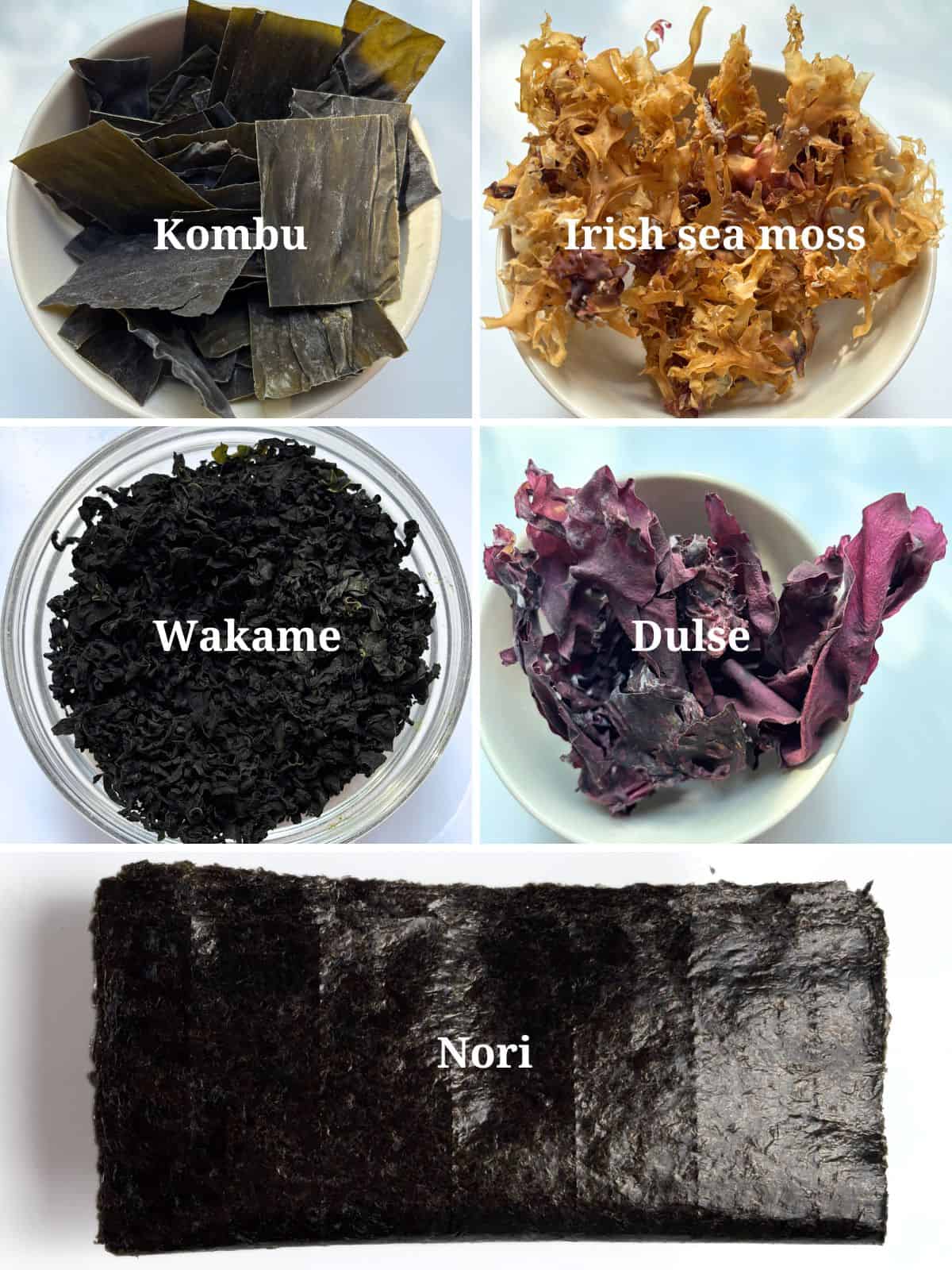
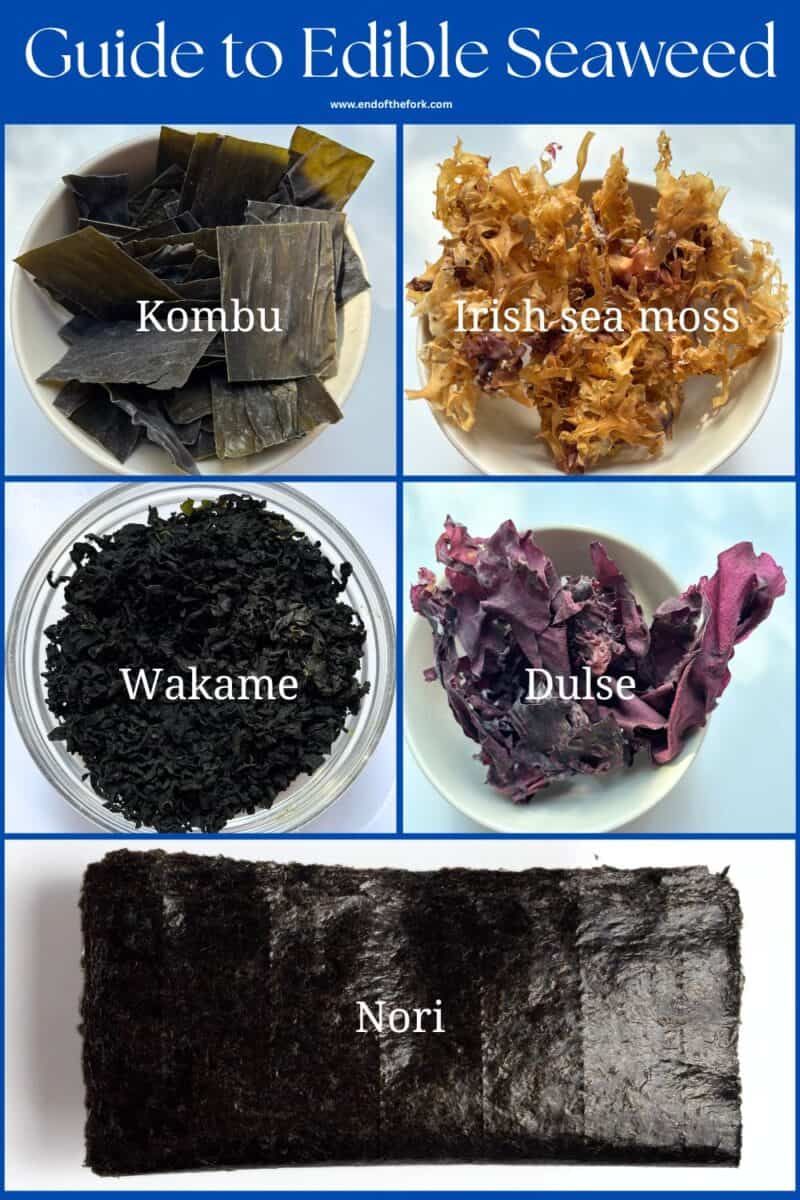
Comparison of common seaweeds.
A comparison of eight varieties of seaweeds commonly found in UK and global waters.
| Seaweed | Type | Where it grows | Tastes like | Best used for |
|---|---|---|---|---|
| Kombu | Brown | Cold waters off Hokkaido, Japan | Mildly salty, clean, earthy | Dashi stock; the base of Japanese cooking |
| Wakame | Brown | Japan, Korea, France, Ireland | Subtly salty, silky | Miso soup, seaweed salad |
| Kelp | Brown | Pacific N. America, Chile, Norway, British Isles | Nutty, savoury; smoky when dried | Soups, stews, seasoning |
| Nori | Red | Farmed in Japan, Korea, China | Faintly sweet, deeply savoury | Sushi, onigiri, seasoning |
| Dulse | Red | Iceland, Ireland, Scotland, N. American Atlantic | Smoky, meaty - bacon-like when fried | Pan-fried as a topping; vegan "bacon" |
| Irish moss | Red | Coasts of Ireland and Britain | Almost flavourless | Thickening & gelling (carrageenan) |
| Sea lettuce | Green | Nearly every coastline on earth | Fresh, grassy, lightly salty | Raw in salads; garnish |
| Sea grapes | Green | Warm Indo-Pacific: Okinawa, Philippines, Vietnam | Clean, salty pop - like caviar | Raw; garnish for visual impact |
Popular varieties: Kombu, Dulse and Nori
Kombu has been harvested for thousands of years in the icy waters off Hokkaido, Japan. It is the cornerstone of Japanese cuisine and the primary component of dashi stock. It was kombu that food scientist Kikunae Ikeda used in 1908 when he first identified and named umami as a distinct taste, driven by its exceptionally high levels of naturally occurring glutamates. Kombu is mildly salty with a clean, earthy richness.
Dulse is found on rocky Atlantic shorelines from Iceland and the Faroe Islands to Ireland, Scotland, the East Coast of America and Canada as it can tolerate more turbulent intertidal conditions than most species. Its intensely savoury, smoky, bacon-like flavour when pan-fried makes it valuable to chefs developing plant-based alternatives to smoked meats.
Nori has been cultivated in Japan since at least the seventeenth century. Most nori today is farmed in the calm coastal waters of Japan, Korea and China. It is prized for being rich in umami components with three types of amino acids, including glutamic acid which provides savoury depth. It is used for wrapping sushi, onigiri and as seasoning in many Japanese dishes. Top-grade nori can be recognised from the darkness of its sheen, melt-in-the-mouth texture and deep, sweet savouriness.
What does seaweed taste like?
Most people are familiar with nori on maki rolls but are less familiar with other varieties. Here are four examples to try, for an idea of their different flavours:
- Kombu - has a clean broth-like flavour with a little saltiness. To make a simple broth, simmer on the lowest heat in water with a few shiitake mushrooms for 15 minutes.
- Wakame - has a silky texture and slight sweetness. For an easy salad, soak for around 10 minutes to rehydrate then dress with rice vinegar and toasted sesame seeds.
- Dulse - has a smoky, almost meaty flavour. For a quick snack or simple garnish, pan fry in a little oil for about a minute till it crisps up.
- Nori (toasted) - dissolves on the tongue, slightly sweet. As it is already processed, it can be eaten straight from the packet.
Seaweed myths
'Seaweed is just for sushi'
Nori is a garnish and wrapper used across Japanese cooking; kombu is used in stockpots; dulse is fried and Irish moss is used as a thickener for desserts.
'It all tastes salty and a bit fishy'
Good qulaity seaweeds don't taste fishy. They can be described as grassy (sea lettuce), smoky, savoury (dulse), or clean and earthy (kombu) and faintly sweet (nori).
'It is just another health-food trend'
Communities in Japan, Wales, and Ireland have eaten seaweed everyday for centuries. It only looks new to cuisines that once forgot it.
'Seaweed farming destroys the ocean'
Diversified and well managed cultivation genuinely helps the ocean. A dense monoculture can block light, reducing biodiversity and be prone to disease, so thoughtful scaling and management are very important.
Tide to table: how seaweed is produced
How seaweed is processed varies enormously by species and its intended use. At its simplest, seaweed is washed then sun-dried, concentrating flavour and boosting levels of vitamin D.
Wakame is blanched immediately after harvest transforming it from brown to bright green before it is salted or freeze-dried for storage and later rehydrated.
Kombu takes longer, it is sun-dried for up to two years to develop the concentrated glutamates that give it its distinctive flavour for dashi, or worked further into tsukudani, or oboro kombu flakes.
Nori undergoes the most sophisticated processing of all seaweeds, using significant expertise. Spores are seeded onto nets in early autumn as water temperatures drop, they are then submerged in sheltered bays, strung on bamboo poles or floated on rafts. Periodic air exposure at low tide keeps disease at bay. After roughly 45 days, once the fronds reach 15-20 cm, specialised boats harvest the crop mechanically. The earliest harvests, running through December, produce the finest quality with fortnightly harvests continuing until warming water ends the season in April.
The raw seaweed is washed, minced to a fine pulp, pressed into rectangular moulds, dried, then toasted. It is a process almost identical to traditional Japanese paper-making, practised for over 300 years. What emerges is a paper-thin sheet with a delicate, faintly sweet oceanic flavour, a pleasant chewiness when fresh and a crisp intensity once toasted.
The sheet that comes out is thin enough to see light through. A good grader can tell the best of them at a glance by the darkness of the sheen. It dissolves on the tongue in a second and tastes faintly sweet.
Beyond these processes brown and red algae are industrially broken down into hydrocolloids that also appear across the food industry. Alginate made from brown algae stabilises ice cream and gels, carrageenan from Irish moss emulsifies plant-based milks and agar from red algae serves as one of the most versatile vegan gelling agents available. Korean and Japanese fermentation traditions also transform seaweeds into umami-rich sauces and pastes.
An important plant source of iodine
Nutritionally, seaweed is high in fibre, low in calories and fat and carries good amounts of calcium, iron, magnesium and potassium. It is also one of the few plant sources of iodine and an important one for vegans. Iodine is important for thyroid function and it's difficult to maintain healthy levels on a pure plant-based diet as most sources are animal-derived.
A diet which includes seaweed would solve this, though levels vary wildly by species and origin, for example kombu has the highest concentration of iodine compared with other seaweeds, so a tiny amount such as ⅛ of a teaspoon would easily meet daily requirements. It is important to know that kombu is so iodine dense that it is genuinely easy to exceed safe levels and excess iodine causes thyroid problems.
Sustainability and environmental concerns
Few foods can match seaweed's environmental record. It does not require watering, arable land, fertilisers nor pesticides. As it grows, it draws carbon dioxide and nitrogen out of the surrounding water easing local ocean acidification, while kelp forests sequester carbon at remarkable rates and provide habitat for fish, invertebrates and countless other marine organisms.
Yet these ecosystems are increasingly under threat. Warming ocean temperatures and nutrient-poor waters driven by El Niño patterns are taking a toll and aggressive sea urchin populations are suppressing kelp forest recovery along coastlines from California to Tasmania making their protection as ecologically urgent as the preservation of tropical rainforests.
On an industrial scale, significant concerns exist surrounding large-scale monoculture seaweed farming in China and South Korea, accounting for over 95% of global production. It raises the same concerns as monoculture farming on land where overly dense seaweed cultivations can block sunlight, reducing biodiversity, disrupting water flow thereby creating conditions for disease outbreaks.
Professor Juliet Brodie of the Natural History Museum, one of the world's leading authorities on seaweed aquaculture, states that well-managed cultivation can simultaneously improve livelihoods and restore marine ecosystems, provided biodiversity is prioritised over monoculture production.
The introduction of non-native seaweed species carries additional ecological risks, for example wakame escaped cultivation and is now considered invasive in parts of Europe and Australia, altering the local biodiversity. There is also the problem of harvesting seaweed from polluted waters as seaweed easily absorbs heavy metals from polluted coastal water, which makes regulation near industrial coastlines a genuine concern.
The processing industry leaves its own trail of considerable biomass waste after agar, carrageenan and alginate have been extracted, although this is increasingly being repurposed as animal feed, biofuel and compost.
Meanwhile, wild harvesting in Ireland, Scotland and Iceland requires careful management to prevent over harvesting and disruption to coastal ecosystems.
Are any seaweeds poisonous?
While the vast majority of seaweeds are safe, a few species worldwide are worth knowing about to avoid problems ranging from mild stomach upset to serious poisoning.
In some parts of the world, seaweed is one of the safest things you can forage but caution needs to be exercised in certain areas. In UK and European waters there are effectively no poisonous seaweeds. The edible species are relatively easy to identify and unlike wild mushrooms or berries there is nothing on those shores that will poison you. In other parts of the world, including warmer US coastlines, a small number of species are worth knowing about and avoiding.
An important one to know is acid kelp (the Desmarestia group, sometimes called sourweed). This is a finely branched brown seaweed that releases sulphuric acid when crushed. It tastes intensely sour and is quite unpleasant to eat but it is capable of causing stomach pain. The other is Lyngbya, a hair-like blue-green algae that forms dense slimy mats in warm shallow water. It can irritate the skin on contact and is potentially toxic so anything growing around it is best left alone.
Wherever you are foraging, contamination is potentially a big risk. Seaweed takes in whatever is in the water around it, easily absorbing heavy metals and pollutants. You should only harvest from clean water away from industrial areas, busy harbours and sewage outfalls. Select seaweed that is still anchored and growing, never consume bits that have washed up loose on the beach as they may have drifted from polluted water and begun to decay.
Additionally, there are a couple of edible seaweeds that should be consumed in moderation: hijiki can accumulate inorganic arsenic and kombu is so high in iodine that large amounts may affect the thyroid.
The simple rule is the same for all types of foraging: be certain of what you are gathering, harvest only from clean water and wash it well. In the UK, the Food Standards Agency publishes full guidance for safe foraging. In the US, rules vary by state so check your state fisheries department or local Sea Grant program for harvesting rules and water-quality advice. Wherever you live, the best way to start foraging seriously is with an experienced local expert, rather than from photographs.
A checklist for foraging
- Cut fronds with a sharp knife and leave the holdfast on the rock, so it can grow back.
- Trim small pieces from algae in different spots rather than stripping one patch bare.
- Consider the quality of the water before you harvest as seaweed absorbs heavy metals in surrounding water.
- Do not harvest close to harbours, marinas, outflow pipes, or anywhere the water remains stagnant rather than flowing.
- Treat pollution as a genuine risk.
- Do not pull out the seaweed with the holdfast as it is the seaweed's 'roots' which allows it to grow back.
Two easy seaweed recipes
Try these two easy seaweed recipes for Kombu Dashi (a vegan stock) and Dulse 'Bacon' Bits, both use dried seaweed which keeps for months in a cupboard.
Kombu dashi: the stock of Japanese cooking
All you need are two ingredients: a piece of dried kelp and a pan of cold water. Warm the water gently on lowest heat (80℃/175℉) - just under boiling temperature, for ten minutes and you will have a clear, golden, deeply savoury stock that forms the base of many Japanese dishes from miso soup to ramen broth. This is an easy way to understand umami flavour as kelp is the seaweed Kikunae Ikeda was studying when he named the taste.
Fried dulse: vegan "bacon"
Fry a few pieces of dried dulse in a little oil on a hot pan for a minute and they will curl, crisp and turn smoky. It will still have a seaweed texture but a smoky meaty flavour that is often compared with bacon - the reason plant-based chefs keep reaching for this particular seaweed. Scatter it over avocado toast, baked potatoes or scrambled tofu. Try this recipe for Dulse 'Bacon' Bits
So, should we be eating more seaweed?
Yes, and not just for its health benefits. From the kombu broths of Hokkaido to dulse replacing bacon in vegan dishes, seaweed's range on the plate is remarkable. The entire British coastline alone has a tremendous supply of inexpensive and nutritious aquatic vegetables which could contribute to a healthy diet.
If farmed and harvested responsibly then processed with care, seaweed could become a pillar of a far more sustainable food system, one that requires almost nothing of the land, nor freshwater or fertilisers that the rest of our food depends on.
FAQs
Yes, in reasonable amounts, but kombu specifically is so iodine-rich that eating too much regularly can affect thyroid function. A small amount (a sheet measuring a couple of inches in a dashi for one or around ⅛ teaspoon of kombu) easily covers daily iodine needs.
As long as it was foraged from unpolluted waters or sourced from a reputable company, raw seaweed will not make you ill. In fact there are several varieties such as sea lettuce and rehydrated wakame that are commonly eaten raw in salads. Others, like kombu or dulse, are typically simmered, fried, or toasted to extract the best flavour, rather than eaten raw.
Only forage from clean water away from harbours, industrial areas, and sewage outfalls and only harvest seaweed still attached and growing, never use the loose pieces washed up on shore. Rules and safety guidance vary by country and even by state in the US, so check your local Food Standards Agency or Sea Grant program.
Seaweed itself is naturally both, but check the packaging on processed products (seasoned nori snacks, seaweed salad mixes) for any added ingredients such as fish flakes or powder.
Dried dulse and nori are the most beginner-friendly. Dulse crisps up in a hot pan in about a minute and toasted nori can be eaten straight from the packet with no preparation at all.
Seaweed has been used independently by coastal cultures worldwide for thousands of years, so names evolved locally long before any shared scientific naming system existed such as kombu (Japan), kelp (Britain/N. America) and cochayuyo (Chile) can all refer to related or even the same species.
Comments
No Comments