

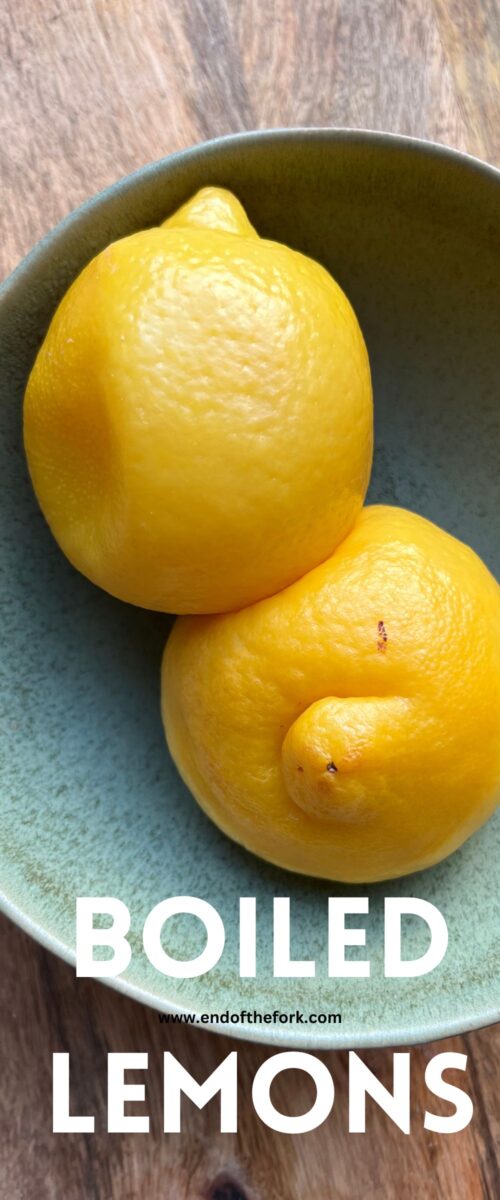
Learn how to boil lemons to reduce bitterness and soften the peel so the whole lemon is edible. This easy method creates mellow, versatile boiled lemons perfect for sauces, soups, marinades and everyday cooking.
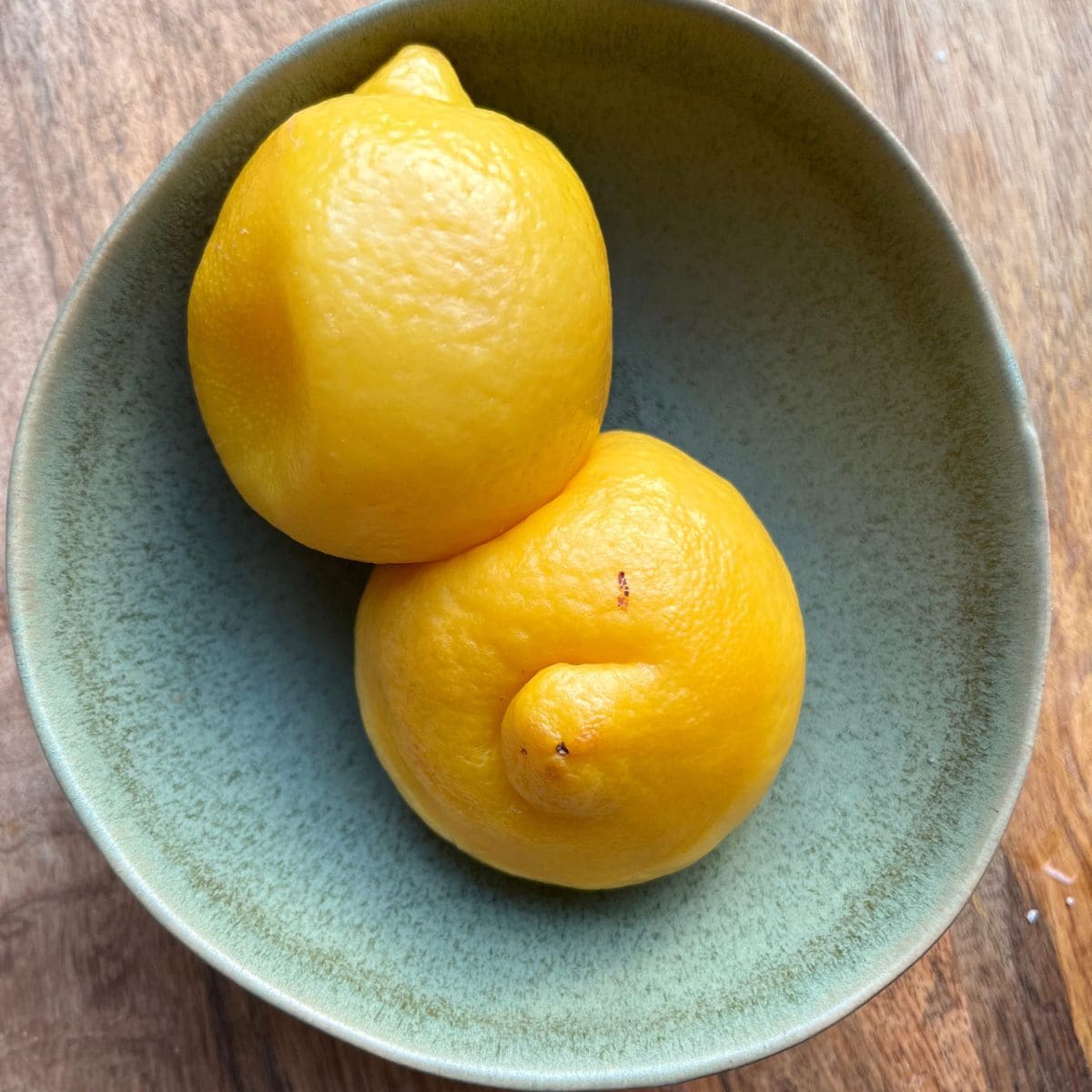
Boiled lemons are less acidic than fresh lemons so they add depth and aroma rather than sharp sourness, making them easy to use in both hot and cold dishes.
They can be used whole, chopped or puréed, adding a rich, rounded citrus flavour to stews, tagines and baked dishes. Use them chopped in salads and vegetable dishes, or puréed into sauces, dressings, marinades, desserts and drinks.
Jump to:
Why boil lemons?
You won't find 'boiled lemons' in a classical cookbook, but the technique behind them is used in almost every professional kitchen. Chefs blanch citrus peel in boiling water, often through two or three changes, to strip out the bitterness. Boiling a whole lemon works on exactly the same principle, applied to the entire fruit rather than the peel alone.
The same technique works for oranges, as in this Andalusian orange cake.
Most of a lemon's character actually sits in the peel and not the juice. The oils that give lemon its distinctive perfume are concentrated in the zest and the peel carries more fibre and flavonoids than the pulp. Squeeze a lemon and you get acidity, but use the whole boiled fruit and you get depth, aroma and texture. That's so much more, from an ingredient you were going to throw away.
Boiled lemons do not taste as sharp as fresh raw lemons, so they add a roundness rather than being very sour, which makes them easy to use in generous quantities in both hot and cold dishes.
What type of lemons to use
Select any variety of firm, heavy, unwaxed medium to large lemons and wash before using.
How to boil them
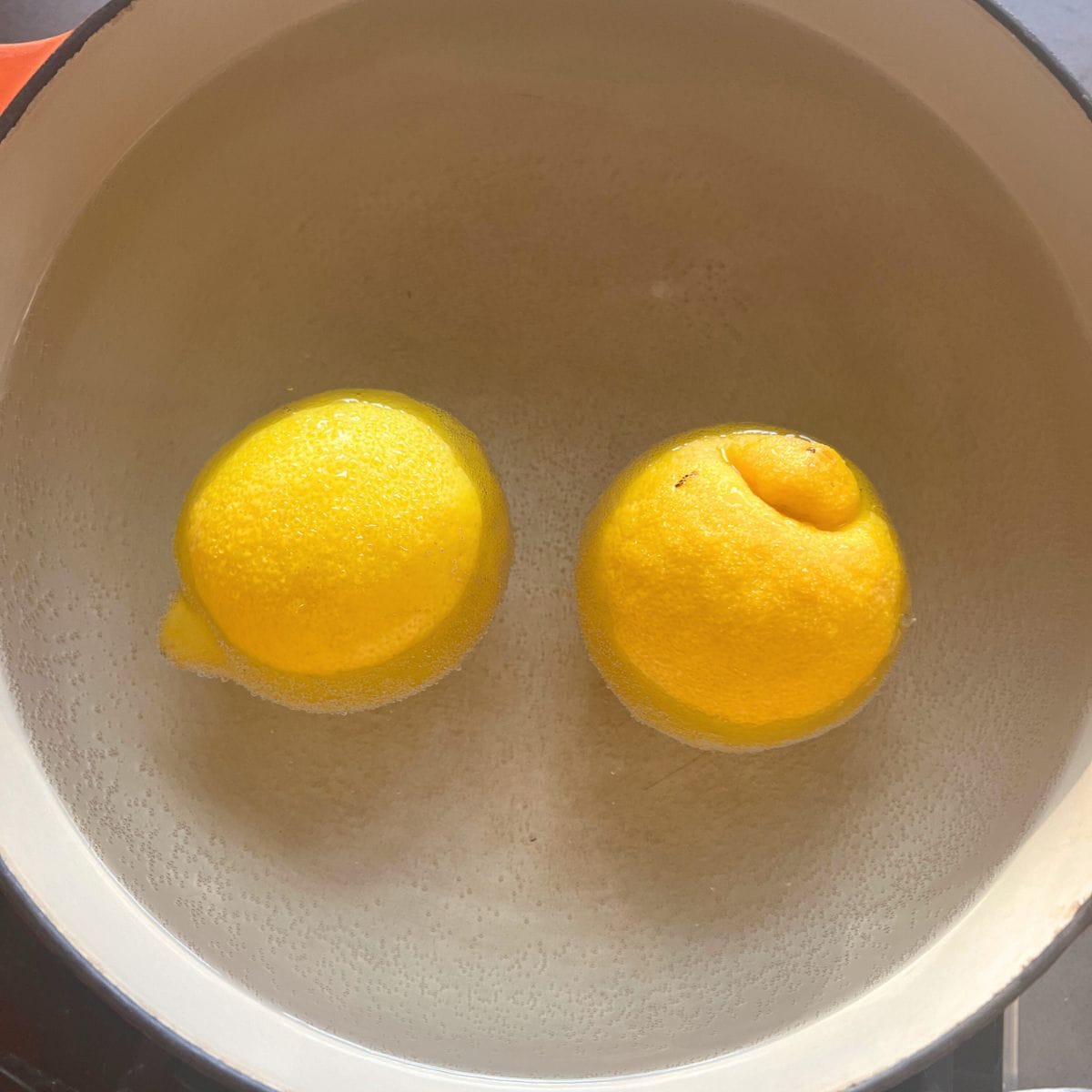
Place the washed lemons in a pan with water. The lemons will bob around the top so you will need to cover the pan while it is cooking.
Bring to a boil for 15 minutes then drain and use a large spoon to carefully remove the lemons to cool in a separate dish.
Use the boiled lemons whole, chopped, squeezed or puréed.
Top tip
Before puréeing or if using boiled lemons in a dessert, cut them in half to remove the seeds before using.
How to use boiled lemons
Boiled lemons are a simple ingredient with many culinary uses. Boiling softens the peel and mellows the bitterness, making the entire lemon, the peel, pith, and flesh edible. Once boiled, lemons can be chopped, blended, or mashed and added directly to dishes for a subtle citrus flavour.
Here are some easy ways to use boiled lemons in everyday cooking:
- Sauces: Finely chop boiled lemons and stir them into pasta sauces, yogurt sauces, or pan sauces for chicken and fish.
- Salad Dressings: Blend boiled lemon with olive oil, mustard, and honey for a balanced citrus dressing.
- Soups & Stews: Add chopped boiled lemon to chicken soup, lentil soup, or vegetable stews to brighten the flavour without sharp acidity.
- Grain Dishes: Mix into rice, quinoa, couscous, or farro along with fresh herbs.
- Marinades: Combine boiled lemon with garlic, herbs, and olive oil for chicken, shrimp, tofu, or lamb.
- Spreads & Butter: Mash into compound butter, cream cheese, feta or ricotta for spreading on bread or serving with vegetables.
- Middle Eastern & North African Recipes: Use boiled lemons as a substitute for preserved lemons in tagines, chickpea dishes, or rice recipes.
Are there health benefits to boiling lemons?
A search for boiled lemons brings up plenty of claims about detoxing, weight loss and disease prevention, so here are some important points to bear in mind:
Vitamin C is largely lost - vitamin C is water-soluble and heat-sensitive so boiling destroys a significant proportion of it although some vitamin C also leaches out into the cooking water. If vitamin C is what you are after, a squeeze of raw lemon juice at the end of cooking will serve you better.
You gain the peel - this is a good nutritional argument for boiling the entire lemon. The peel contains more fibre and flavonoids (including hesperidin and eriocitrin) than the flesh. Boiling not only softens the peel and reduces bitterness to make it easier to eat, but the pectin and flavonoids become easier to digest. The peel also carries most of the lemon's essential oils some of which also dissolve in the water and this is why boiled lemons and their water taste so aromatic.
Bitterness reduces - the bitterness in pith comes largely from limonin and naringin. Boiling softens the cell structure and leaches some of these compounds into the water, which is why the whole fruit becomes palatable. After 15 minutes of boiling, the flavonoids are largely still present, these have been studied for their antioxidant and anti-inflammatory effects.
What they could do - boiled lemons won't alkalise your blood but they can change the pH of your urine reducing the risk of kidney stones. Drinking boiled lemon water won't cause weight loss but will keep you hydrated which can create a feeling of fullness. What they will do is add flavour and fibre to food without added salt, sugar or fat, which is a perfectly good reason to use them.
For a homemade drink which is rich in flavour and has vitamin C, save the cooking water and once cooled, add it to a drink, or blend and add the boiled lemon for a thicker consistency, adding a little honey or maple syrup to sweeten.
Table: boiled vs preserved lemons
Boiled and preserved lemons are not the same, although both have reduced bitterness compared to a raw lemon. Boiled lemons have a milder citrusy flavour, while preserved lemons are salted with an intense fermented umami flavour. Here is a comparison of the two:
| Boiled lemons | Preserved lemons | |
|---|---|---|
| Method | Simmered in water for 15 minutes | Packed in salt and cured |
| Time to make | 15 minutes | 3-4 weeks minimum |
| Flavour | Mellow, aromatic, gently citrusy | Intense, salty, slightly fermented |
| Salt | None | Very high |
| Texture | Soft throughout, flesh intact | Silky peel, flesh usually discarded |
| Best for | Sauces, dressings, grains, marinades, baking | Tagines, stews, dressings where you want punch |
| Shelf life | 3 days refrigerated, 3 months frozen | Up to a year in the jar |
When to use each one
Boiled lemons suit dishes where you want brightness without dominance, for example: a lemony pasta sauce, a grain salad, a marinade for fish. Preserved lemons belong where the dish can take a bold, salty, savoury hit: a lamb tagine, a chicken braise, a punchy vinaigrette.
Substituting one for the other
Boiled lemons can sometimes be used in place of preserved lemons.
If a recipe calls for preserved lemons and you have boiled, use roughly the same quantity but add around a quarter teaspoon of salt to compensate per lemon. You will get the citrus depth but not the fermented complexity.
Substituting the other way is harder, as preserved lemons in place of boiled may overwhelm a delicate dish. Instead, use around half the amount of preserved lemon, rinse and reduce salt elsewhere in the recipe.
Similar Ingredient
Dried Lime (Loomi)
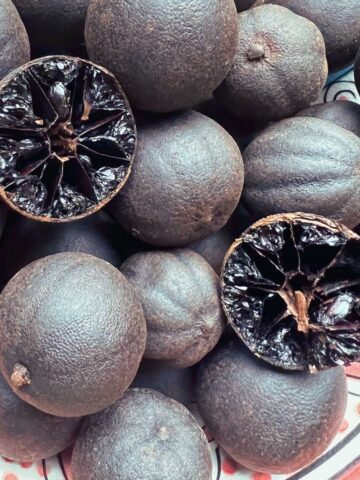
Boiling is one way to transform citrus making it soft and mellow. A dried lime does the opposite, becoming shrunken with an earthy, smoky fermented flavour; it is a staple across Persian and Gulf cooking.
Storing instructions
Storing instructions are the same for whole boiled lemons and puréed boiled lemons.
Boiled lemons can be kept in a sealed container in the fridge for up to 3 days.
To freeze, cool to room temperature then store in a sealed container in the freezer for up to three months.
FAQs
Boiled lemons are used to add mild citrus flavour to sauces, soups, grain dishes, marinades, and dressings. Boiling softens the peel and reduces bitterness, allowing the whole lemon to be eaten.
Yes you can. After boiling, the lemon peel becomes soft and much less bitter, making it safe and pleasant to eat when finely chopped or blended into recipes.
Boiled lemons are significantly less bitter than raw lemons. The boiling process reduces bitterness in the peel and pith, resulting in a mellow, slightly floral citrus flavour.
Boiled lemons are cooked in water, while preserved lemons are cured in salt over time. Boiled lemons are less salty and can be used immediately, while preserved lemons have a stronger, fermented flavour.
Boiled lemons can be stored in an airtight container in the refrigerator for up to 3 days. For best flavour, chop them as needed rather than all at once.
Boiled lemons work best as a flavouring ingredient, not a direct substitute for lemon juice. They add aroma and complexity rather than sharp acidity.
You may also like
Looking for other recipes like this? Try these:

Did you make this? Comment below and tag @endofthefork on Instagram
Recipe

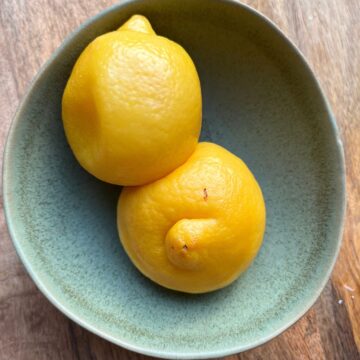
How To Make Boiled Lemons
Ingredients
- lemons - unwaxed, washed 2
- water for boiling
Instructions
- Place 2 lemons in a pan of water for boiling, cover and bring to a boil then turn down the heat and simmer for 15 minutes.
- Drain and carefully remove lemons using a large spoon then set aside in a dish to cool.
Notes
Boiled lemon uses
Boiled lemons can be used in a wide variety of savoury recipes as the peel becomes tender and the bitterness is reduced, making the entire lemon edible. Finely chop or blend boiled lemons and add them to sauces, soups, marinades, salad dressings, grain dishes, or chicken and fish recipes for a mild, balanced citrus flavour.Storing instructions
These are the same for whole boiled lemons and pureed boiled lemons. Boiled lemons can be kept in a sealed container in the fridge for up to 3 days. To freeze, cool to room temperature the store in a sealed container in the freezer for up to three months.Only you will see your notes and you can edit them anytime.
Nutrition
Nutritional information calculated automatically per serving, accuracy cannot be guaranteed.
Comments
No Comments