

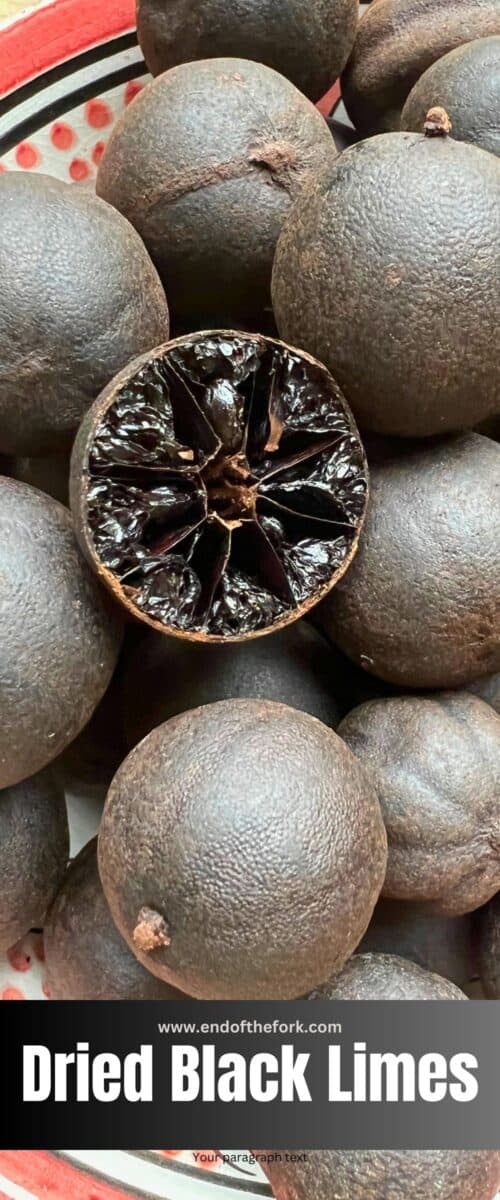
Dried limes, also called loomi, Omani limes or black limes, are whole limes that have been boiled in brine and dried until hard, dark and hollow. This gives them an intense smoky, tangy, slightly fermented citrus flavour.
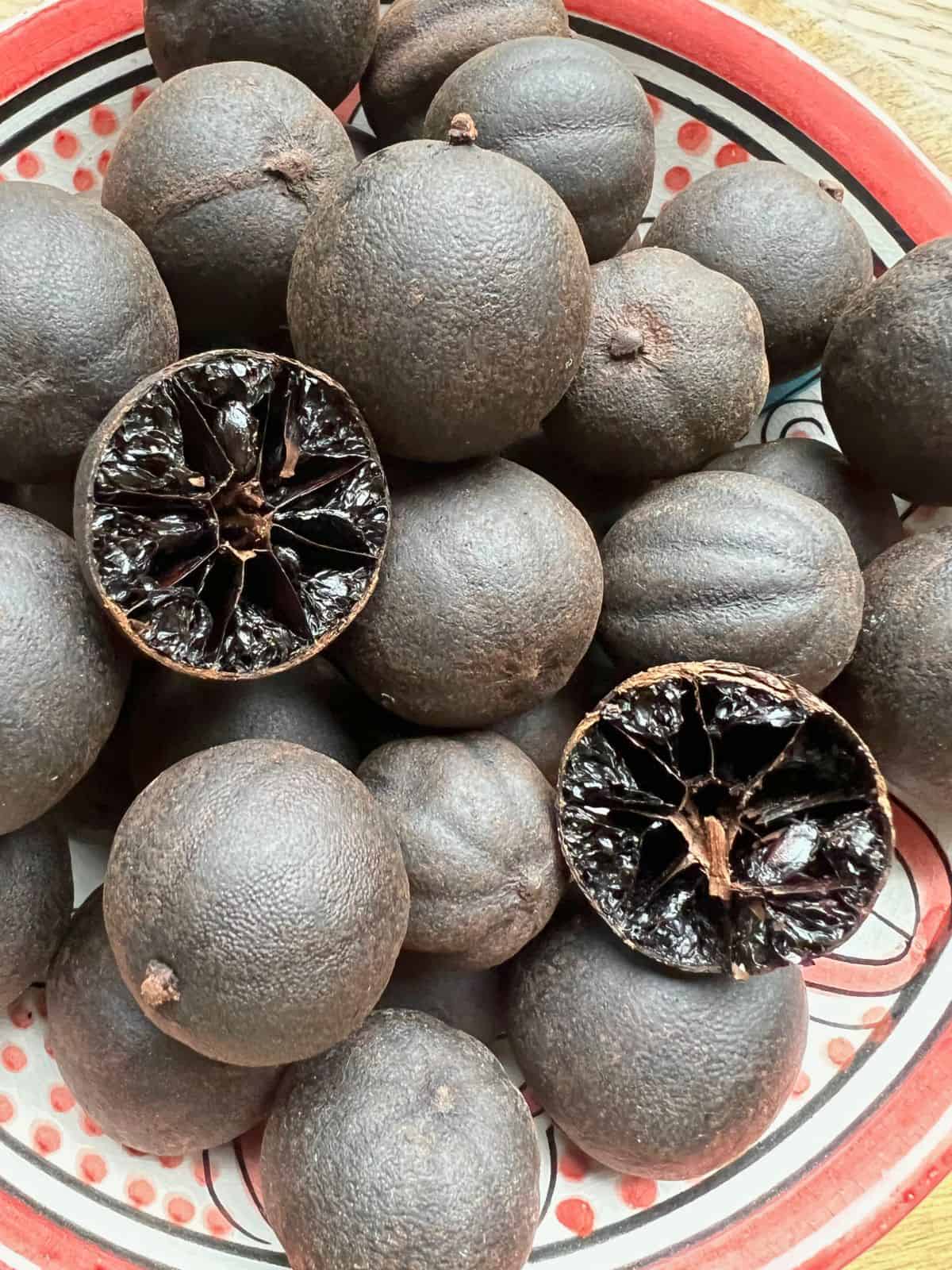
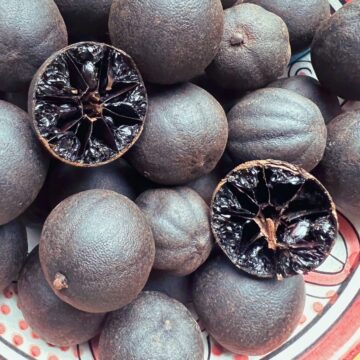
Cut a dried lime (loomi) in half and it looks less like food than something you might find on a beach - dark, brittle and hollow with a dry and dusty interior. Yet this unpromising little husk is one of the most prized flavourings in Gulf and Persian cooking, capable of transforming a pot of rice or a slow-cooked stew with a single piece.
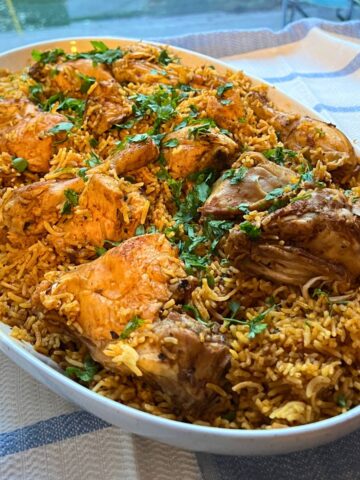
Think of them as a flavour bomb - adding a complexity of smoky depth, earthy tartness and a delicious tang to soups, stews, rice dishes and slow-cooked meat, like this kabsa.
Jump to:
- What are dried limes or loomi?
- Loomi vs fresh limes
- Loomi and Ramadan
- What do loomi taste like?
- Black vs brown dried limes
- How to make dried limes at home
- Ways to use dried limes
- Cooking with black limes
- Make dried lime powder
- Top tip
- Are dried limes good for you?
- How do you store dried limes
- FAQs
- You may also like ...
- Recipe
- Reviews
What are dried limes or loomi?
Depending where you are in the world, dried limes are also known as loomi, Omani limes or Persian limes. They are a popular ingredient in the cuisines of the Gulf States, Iraq and Iran. In India a similar sour flavour is obtained from anardana (pomegranate seeds) and amchoor (mango powder) in northern cooking, Kokum and tamarind in the south and southwest.
Dried limes are entirely different to fresh limes, with an entirely different aroma and flavour profile (e.g. dried limes are more bitter but less acidic), so they are not really suitable substitutions for each other.
Dried limes are mildly acidic, sour but some bitterness.
Loomi are added to dishes to give a unique and distinct flavour which is slightly astringent, rich, fermented and citrusy. They are typically used for dishes with meat, chicken, fish, vegetable, lentil and rice but can also be used for salads, soups and for loomi tea (recipe below).
Fresh Persian limes are used to make dried limes as they have a thin skin, are sweeter and less acidic than other varieties.
Loomi vs fresh limes
Dried and fresh limes come from the same fruit but their flavour is not the same.
Fresh limes are more acidic with a sharp sourness that hits immediately and fades quickly. Dried limes are sun-dried over a period of time, so they have a mellow, deep, smoky, fermented tangy flavour with earthy, slightly bitter background notes that build and become richer over long cooking. Where a fresh lime lifts a dish at the last minute, a dried lime works slowly, lending a savoury, musky depth you cannot get from the fresh fruit.
This is why the two are not interchangeable, with fresh limes being the finishing squeeze of brightness and loomi, the slow-cooked backbone of flavour.
Loomi and Ramadan
Dried limes are especially associated with Ramadan across the Gulf and Iran, where their tangy mild acidity flavours slow-cooked stews, hearty soups and spiced rice dishes served through the holy month. Loomi tea, slightly sour and often sweetened with a little honey, is a common part of breaking the fast. If you are cooking for Ramadan or Eid, a few dried limes are one of the simplest ways to bring an authentic Gulf or Persian character to the table.
What do loomi taste like?
They have a complex sourness, smokey flavour with fermented slightly bitter and earthy notes.
Black vs brown dried limes
There are two varieties of dried limes - brown or black. Preparation for both begins in the same way.
The limes are first blanched in salted water, cooled, then left to dry in the sun for several days. The longer the limes are left in the sun, the more they dehydrate and the darker they become.
Brown limes are dried for a shorter time and retain some moisture so they are slightly soft.
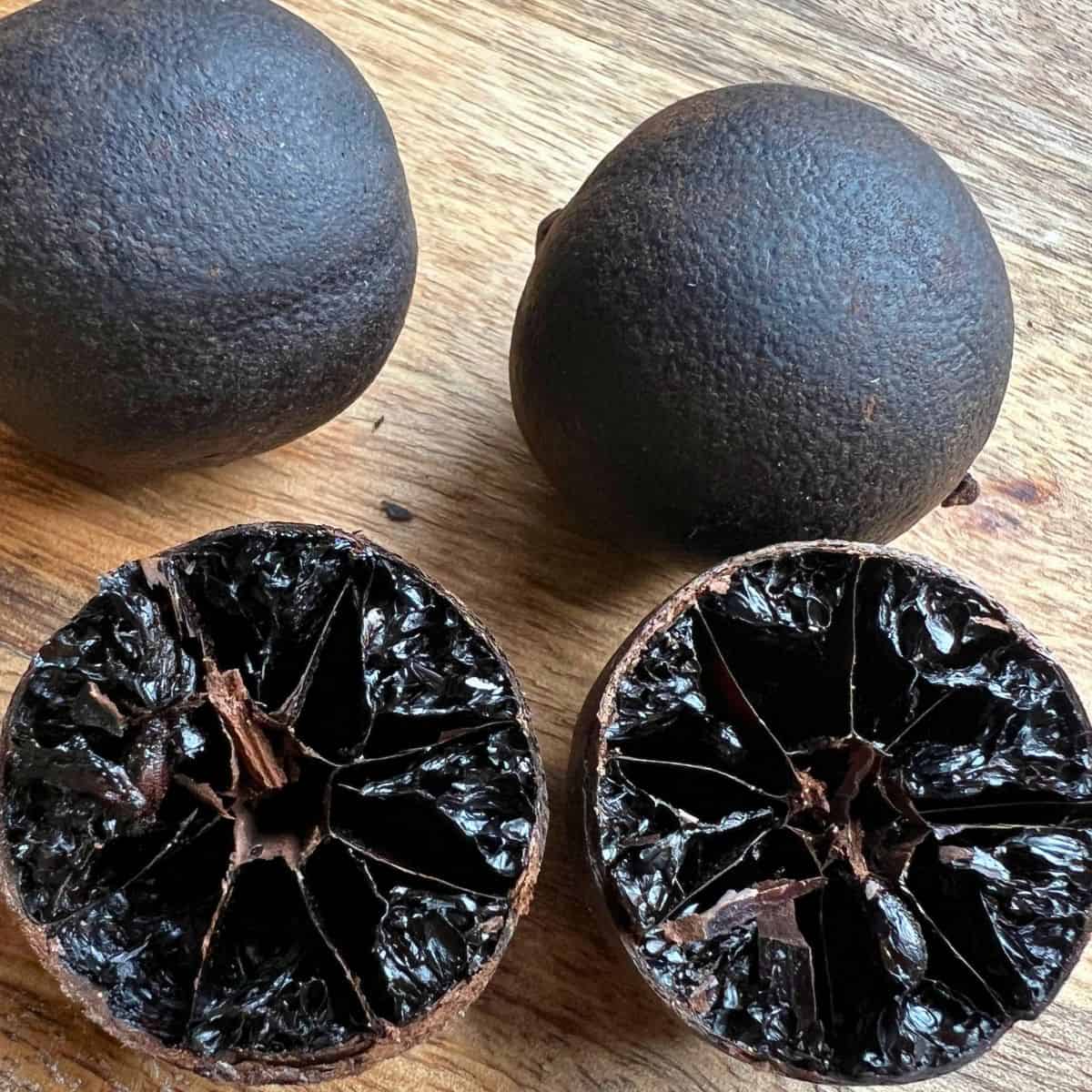
Black limes have lost all their moisture giving them a hard, crunchy texture however, they are still easy to cut or blend to a powder.
The flavour becomes more intense the longer the limes are left to dry so black dried limes are the more bitter of the two.
Black limes taste slightly fermented and smokey while brown dried limes are more fragrant and citrusy.
How to make dried limes at home
Dried limes are easy to make at home if you can't find them locally, all you need is fresh limes and time.
Use Persian limes if you can, as their thin skin, sweetness and lower acidity are traditional, although any lime will work.
Method:
- Blanch - bring a pan of salted water to the boil and simmer the whole limes for 3-5 minutes. This helps preserve them and speeds up drying. Drain and pat the limes dry.
- Dry - traditionally, limes are left in the sun for one to two weeks. They are turned occasionally till they are dried, turned hard and sound hollow. If you cannot dry them in direct sunlight, use a low oven (around 90°C / 200°F) or a dehydrator for 8-12 hours, till they are completely hard and rattle when shaken.
- Colour - the longer they dry, the darker and more intense they become, so take them in earlier for fragrant brown limes, or leave longer for deeper, smoky, fermented black limes.
Storing - When properly dried they will keep in an airtight container for up to a year.
Ways to use dried limes
- soups - slice in half and add to soups as they are cooking
- kabsa - this is a chicken and rice dish from the middle east which uses dried black limes
- stews - with chicken, meat or fish such as Persian Gormeh Sabzi, Palestinian Samak bi Rumaan, Abgoosht Persian lamb stew.
- rice - sliced in half and stirred into rice before it starts boiling
- flavoured with loomi - grind to powder and sprinkle over eggs, salads like this watermelon salad as it is lovely with fruit.
- loomi tea - as a delicious digestive aid. To make 2 cups, boil a teaspoon of loomi powder in a saucepan with 3 cups of water for 5 minutes, then strain, sweeten with honey (optional) and serve.
Cooking with black limes
For slow cook dishes pierce holes in each dried lime and as the dish simmers the limes become tender, slowly releasing flavour. For a faster release of flavour slice each lime in half removing any seeds then submerge in the cooking liquid. Grind halved limes (seeds removed) in a coffee grinder or spice mill to a fine powder for instant flavour.
Make dried lime powder
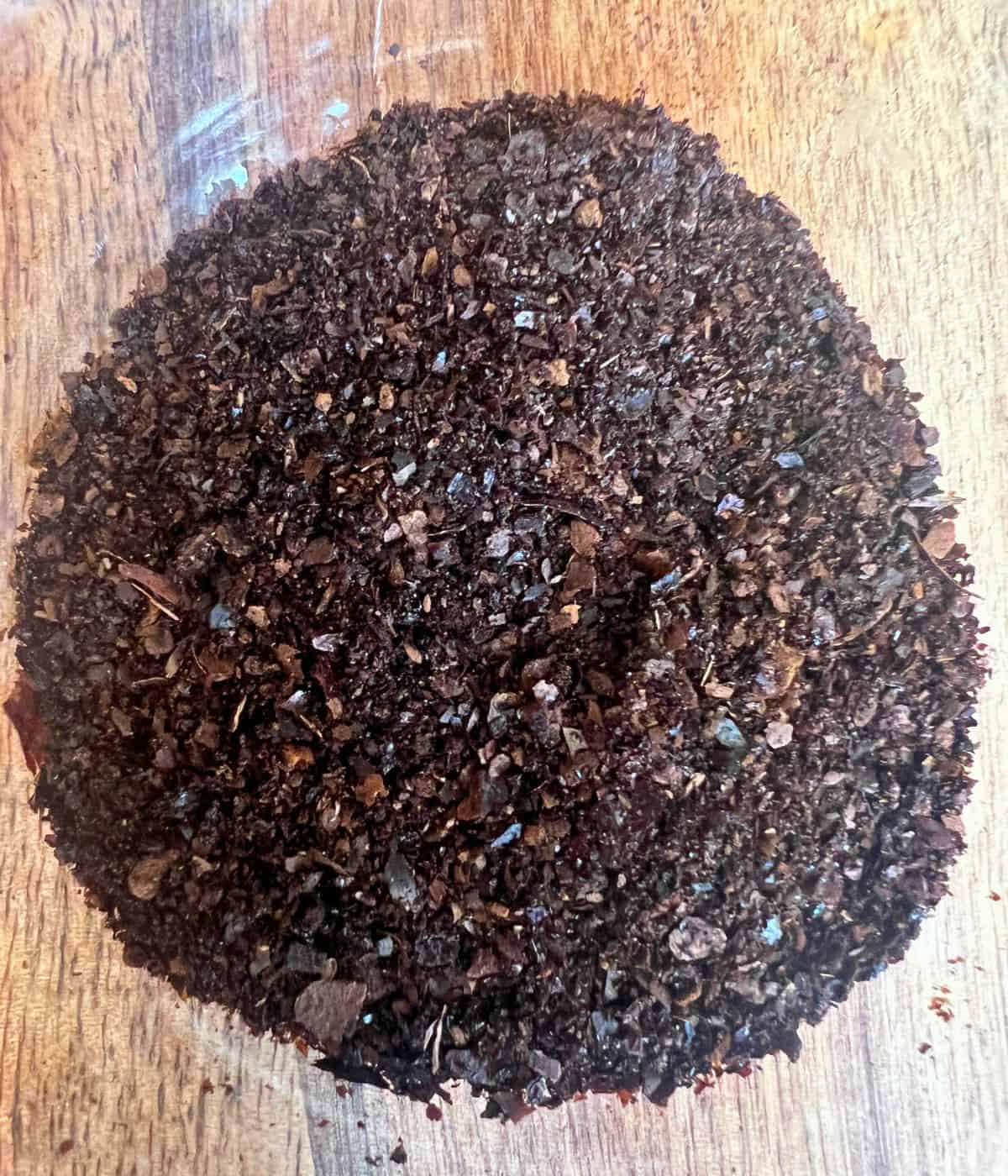
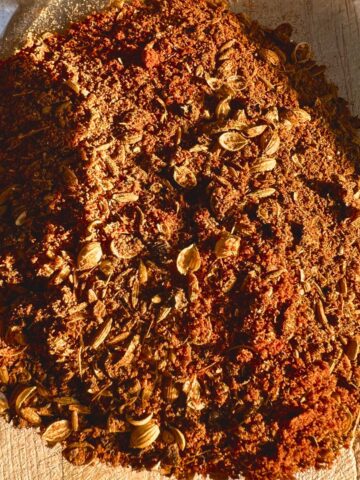
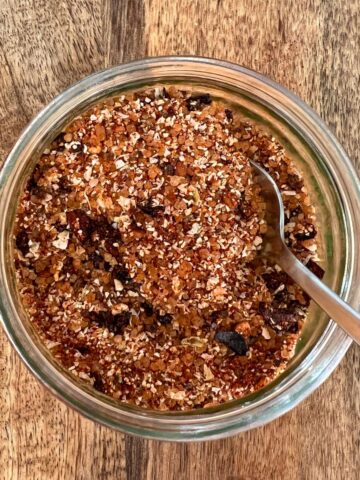
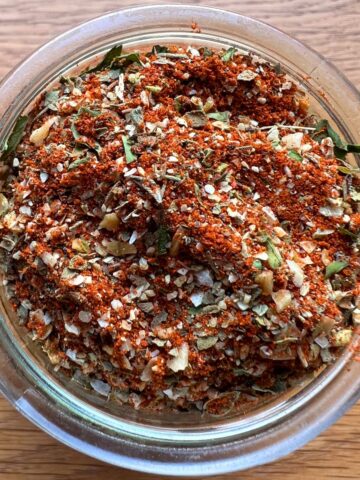
To make dried lime powder, place the limes under kitchen paper and smash with a rolling pin or skillet, remove the seeds then use a spice or coffee grinder to grind to powder (see photo above).
Loomi powder is good for rubs, to make loomi tea, adding to sauces and stews or for garnishing salads and soups.
Top tip
For best flavour grind dried limes to a powder before you need to use it as once they are ground, the oils quickly dry up and flavour is lost.
Are dried limes good for you?
Dried limes have long been used in Gulf and Persian cuisine, usually taken as a soothing tea to aid digestion, for respiratory illnesses or to reduce nausea. They are known to be high in antioxidants and minerals, providing health benefits for the digestive and immune systems.
Loomi tea is made by simmering crushed or ground dried limes in water for around 5 minutes for a light-medium strength tea. It is then sweetened with sugar or honey and served warm or poured over ice for a refreshing drink.
The quantities usually required in cooking are small but add lovely flavour. They are a great way of adding acidity (milder than other citrus ingredients), cutting through fats, building complex flavour and depth without requiring extra salt, sugar or fats.
How do you store dried limes
Unwashed, uncut whole dried limes will keep for a very long time. Store in an airtight container and keep in a cool dry place for up to a year. Once they have been washed and cut they should be used the same day.
FAQs
Brown dried limes are more fragrant with a mild citrus flavour while black dried limes have a fermented, smokey and slightly astringent flavour.
Add dried limes to lift flavour in soups, stews, slow-cooked meat and rice dishes, dry rubs, marinades, over salads, in cocktails or for loomi tea.
There are a few ways to use dried limes with varying degrees of flavour. For slow cook dishes use a knife to pierce holes into the dried lime before submerging in the cooking liquid. The lime slowly becomes tender, releasing flavour. For quicker release of flavour slice the lime in half removing any seeds before stirring into the cooking liquid, or better still grind to a powder for instant and even distribution of flavour.
Slice the dried lime in half and remove any seeds, then grind in a coffee grinder or spice mill to make a fine powder. Only grind as much as you need at a time as the oils dry quickly and lose their flavour, making dried lime powder unsuitable for storing for any length of time.
Unwashed dried limes will keep for a very long time. Store in an airtight container and keep in a cool dry place for up to a year.
Blanch fresh Persian limes in salted water then arrange on a tray to dry in the sun for a few days till they turn brown or black as required for your cooking.
Dried limes have a distinct flavour and are very different to fresh limes so one cannot be substituted for the other. If you do not have dried limes, try using sumac which is closest in flavour as it is citrusy and tangy with smokey notes, however sumac is milder and doesn't have the same complex flavours of dried limes.
Loomi or dried limes can be found at most Middle Eastern and Persian grocery stores, online from Amazon or speciality spice shops.
You may also like ...
Looking for more recipes like this? Try these:
Recipe

How to Make Dried Limes (Loomi)
Ingredients
- fresh limes - Persian fresh limes if available 8 whole
- salt 2 tablespoon
- water - enough to cover
Instructions
- Wash 8 whole fresh limes before using.
- Bring a large pan of water to the boil and add 2 tablespoon salt. Add the whole limes and simmer for 3-5 minutes. Drain the limes and pat the surface dry.
- Dry them out fully: leave in direct sun for 1-2 weeks, turning occasionally, until hard and hollow-sounding. Or use a low oven (90°C / 200°F) or a dehydrator for 8-12 hours until completely hard and rattling when shaken.
- The longer they dry, the darker and more intense they become. Bring them in earlier for fragrant brown limes, or leave them longer for smoky black limes.
Nicole's Notes
- Drying time varies hugely by method: 1-2 weeks in the sun, 8-12 hours in an oven or dehydrator.
- For best flavour use the direct sunlight method.
- For best flavour grind dried limes to a powder before you need to use it as once they are ground, the oils quickly dry up and flavour is lost.
- Storing - store unwashed and uncut dried limes in an airtight container and keep in a cool dry place for up to 1 year.
- Cooking - For slow cook dishes pierce holes in each dried lime and as the dish simmers the limes become tender, slowly releasing flavour. For a faster release of flavour slice each lime in half removing any seeds then submerge in the cooking liquid. Grind halved limes (seeds removed) in a coffee grinder or spice mill to a fine powder for instant flavour.
Only you will see your notes and you can edit them anytime.
Nutrition
Nutritional information calculated automatically per serving, accuracy cannot be guaranteed.
Comments
No Comments