

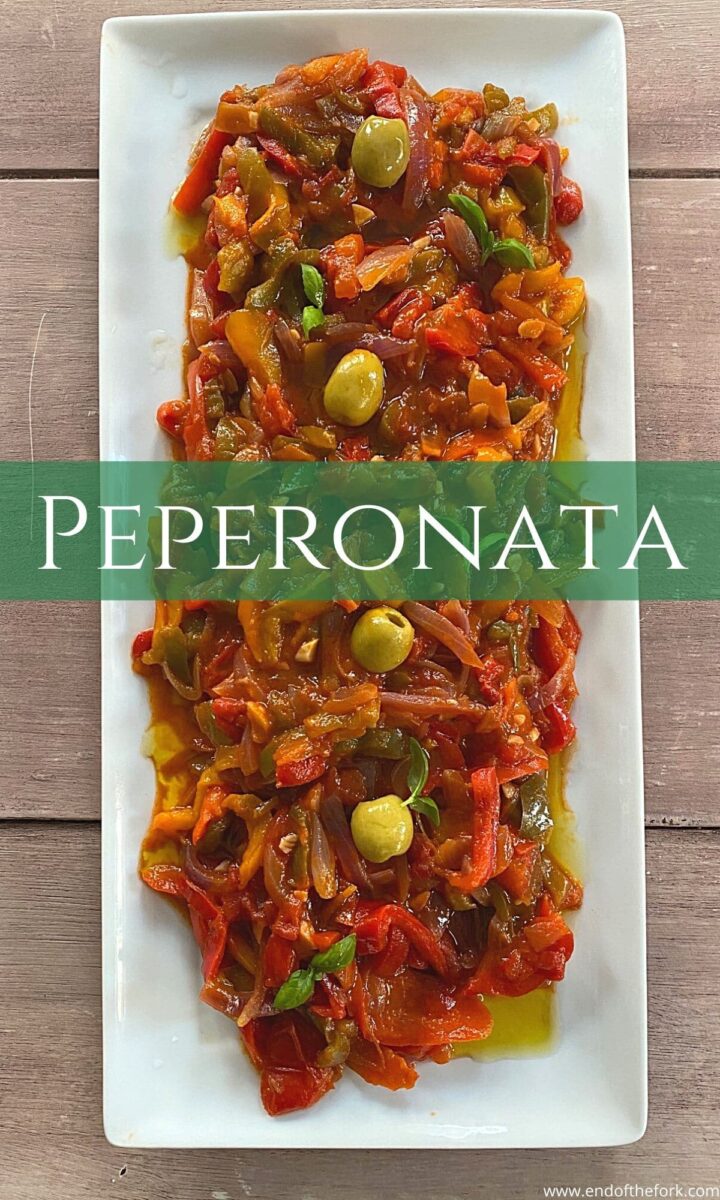
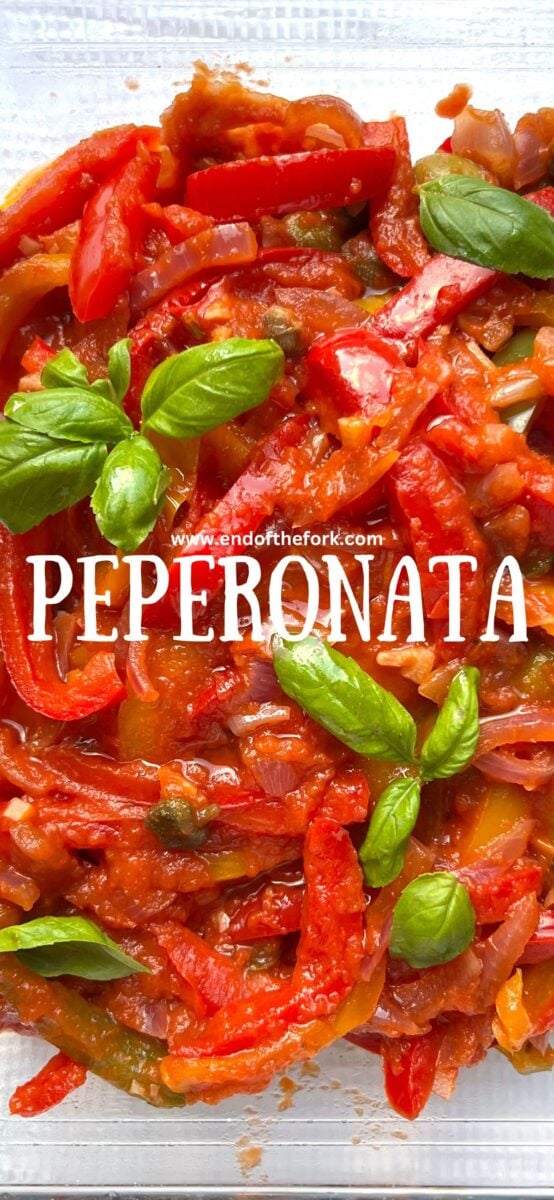
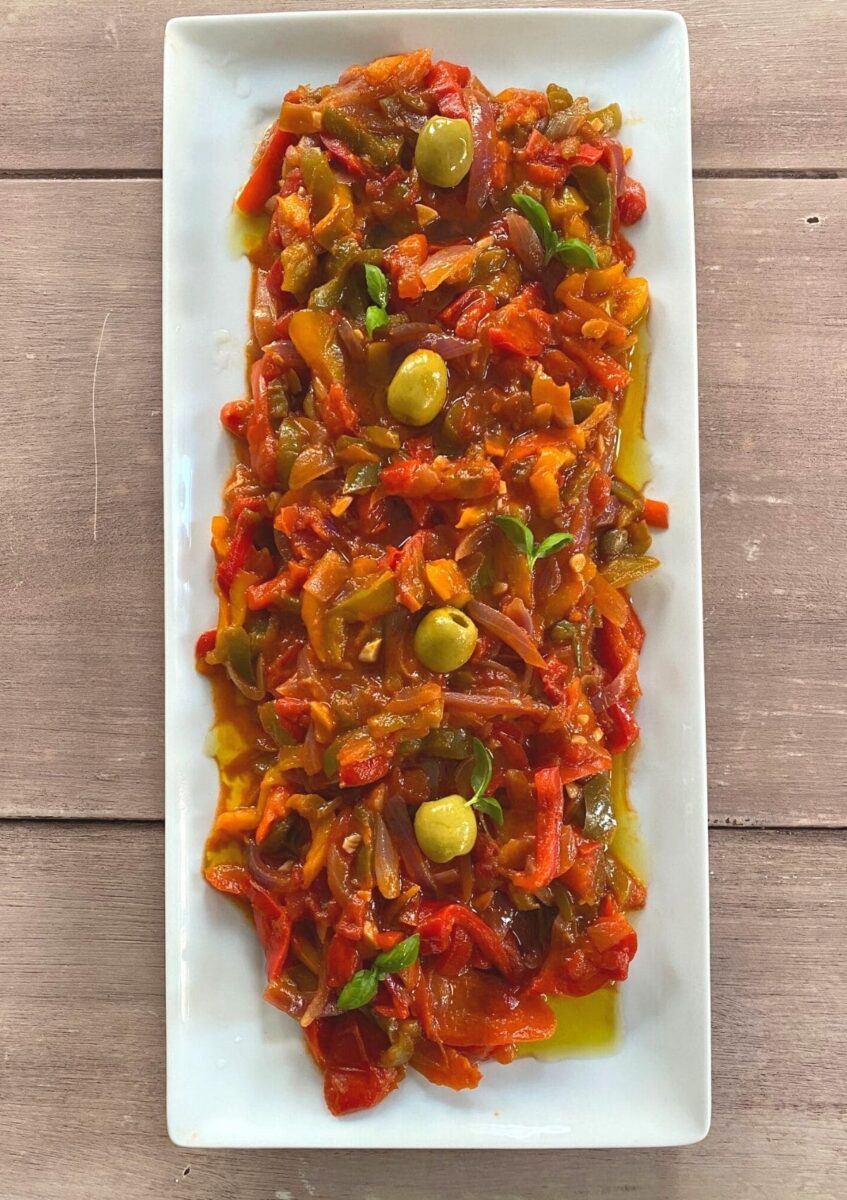
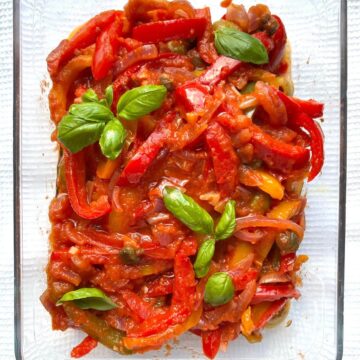
Peperonata is a wonderful Italian summer dish made by slow cooking peppers in a rich tomato sauce. Serve as antipasto, a sauce for pasta, or as a relish for grilled and barbecued meats.
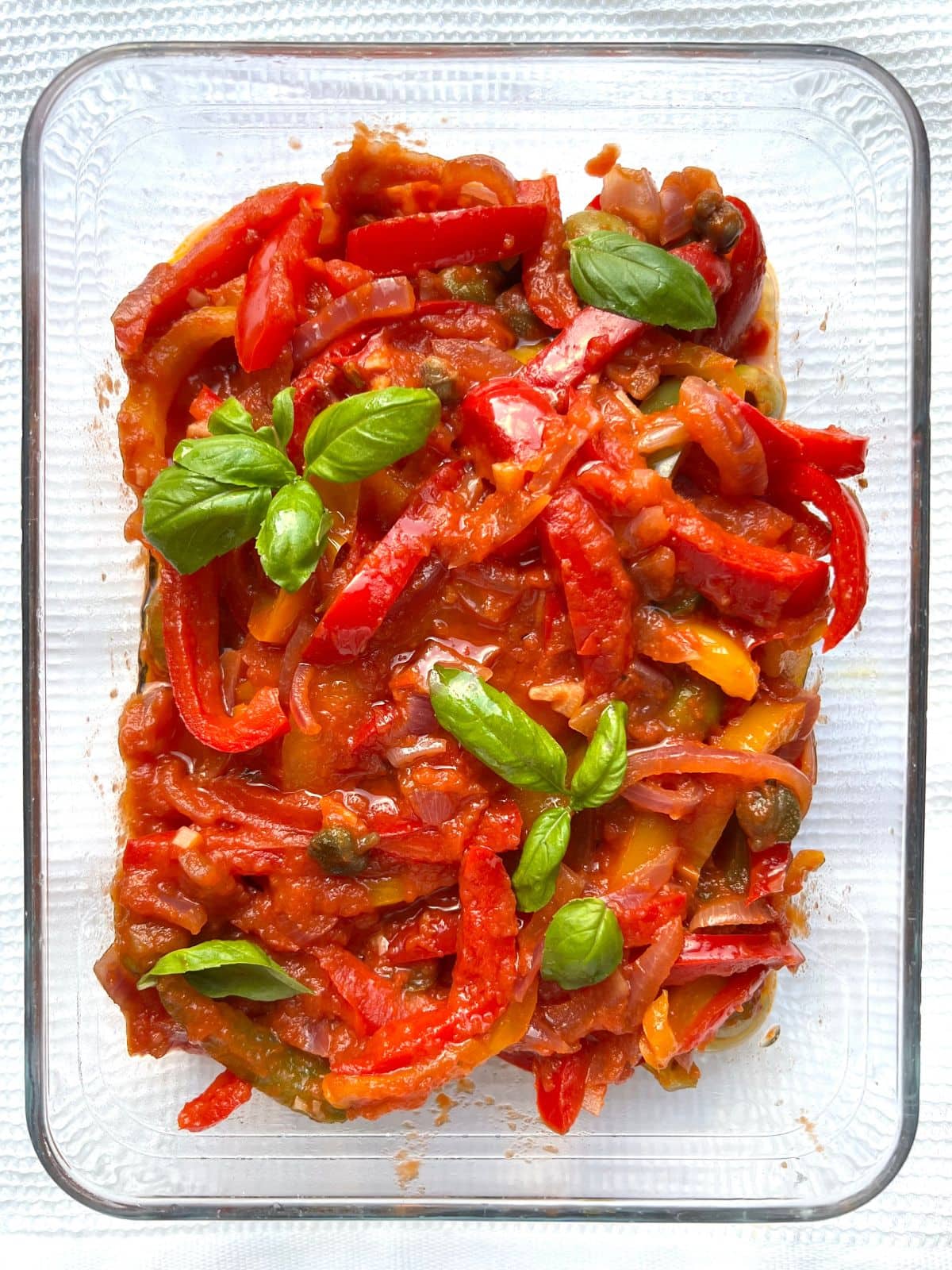
Peperonata is a popular summer dish in Italy, when peppers are at their best. It is prepared using bell peppers, onions and tomatoes simmered together to produce a sweet, tangy dish with rich flavour. The beautiful vibrant colours and fresh flavours of this simple dish delight the senses and it is often enjoyed as an antipasto with crusty bread, or as a sauce for pasta.
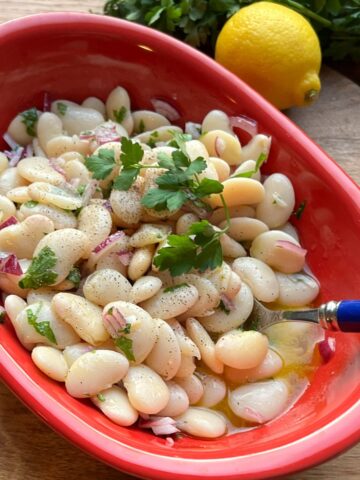
For more antipasti ideas try our Two Bean Salad, and Tuna & Cannellini Bean Salad.
The slight acidity also makes this a great side for grilled meats and fish, or as a relish in a burger/sandwich.
Peperonata tastes even better when prepared several hours ahead as this allows the flavours to really come together. I always make a large batch to keep in the fridge for a delicious easy addition to dishes or snacks.
Across Italy there are many regional variations to this dish, some of which you can find below.
Jump to:
About the ingredients
Italian food is all about using top quality ingredients for great flavour.
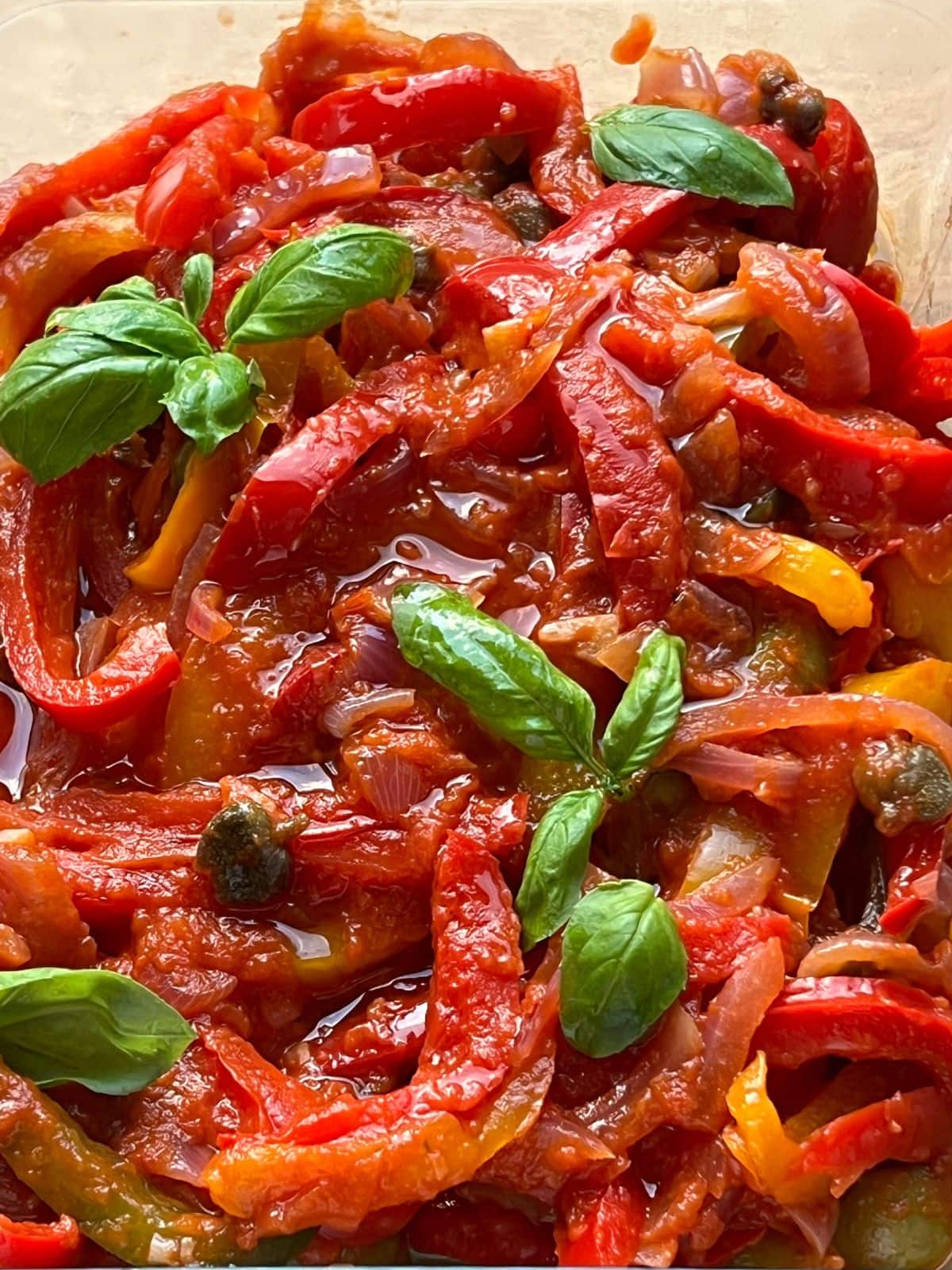
Select firm glossy red, yellow, orange or green peppers.
We like to use red onions as they have a milder and sweeter flavour, but white ones work well too.
Use a good brand of canned tomatoes, we like the fresh flavour of Cirio chopped tomatoes.
Capers are optional, so you can leave them out, but they do add an extra layer of flavour to the dish. Dry salted capers have a more intense flavour compared with those sold in vinegar or brine. To use salted capers, rinse them first in a bowl of water to remove excess salt before adding them to the dish.
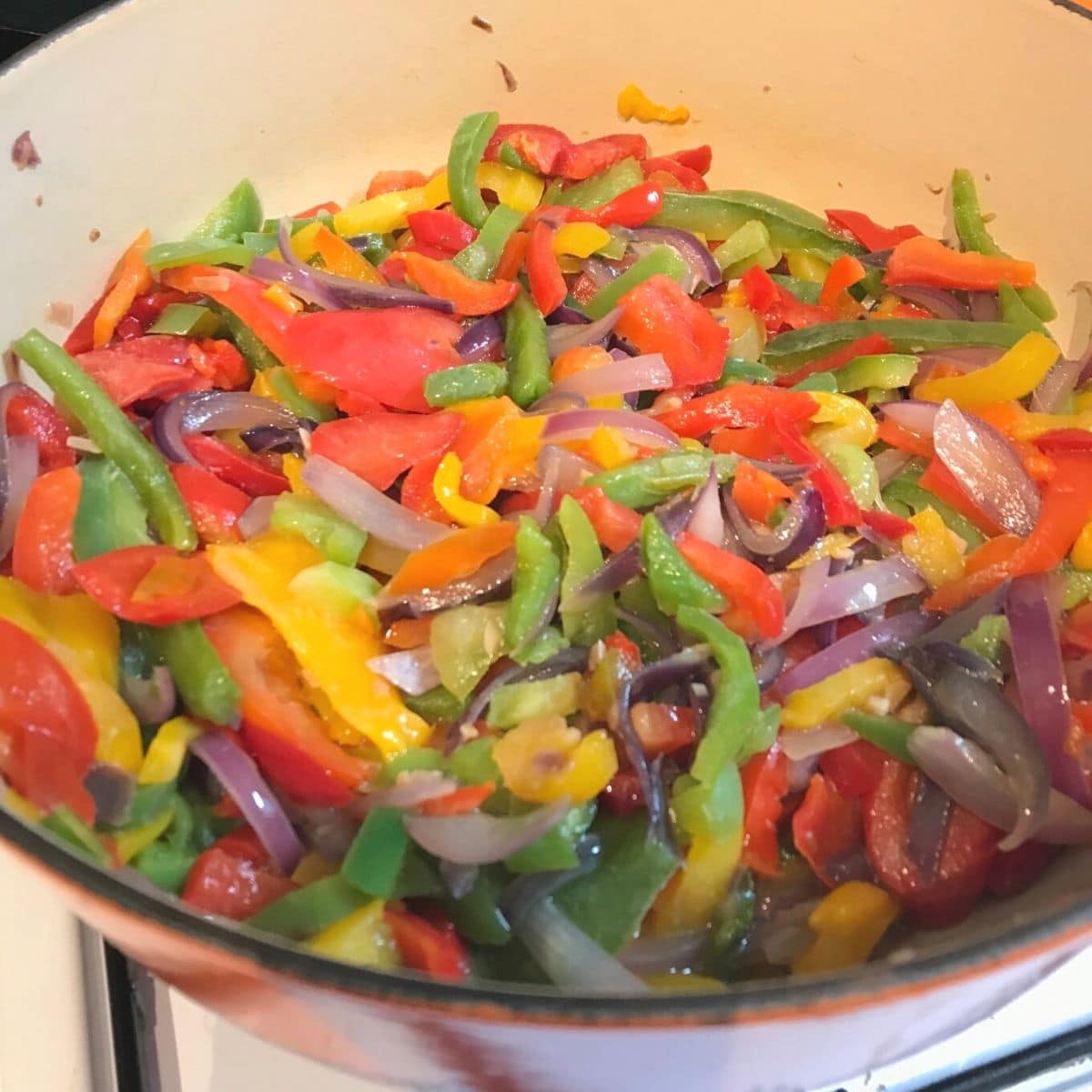
Tear rather than chop the basil leaves, into halves or quarters for maximum flavour, before adding them to the dish.
To finish, drizzle over some olive oil before serving. There is a huge difference between a good quality olive oil and the cheaper varieties which do not have good flavour when served as a dressing. Check out these tips on How to Select A Good Quality Olive Oil .
Top tip
Heat the oil and garlic together to slowly release the garlic flavour. This is better than adding garlic to hot oil as it will cook too quickly and burn, spoiling the dish with a very unpleasant and bitter flavour.
Do you need to peel the peppers?
No it isn't necessary, the slow cooking softens the skins and they provide a good deal of nutrients.
Some traditional Italian recipes do call for peeling, usually by charring the peppers under a grill first and slipping the skins off. It gives a silkier, more refined texture and a faint smokiness and it is worth doing if you are serving peperonata as a standalone antipasto for guests. But it adds a good twenty minutes and for everyday cooking, the difference is small. Cook the peppers slowly enough and the skins soften into the sauce.
Variations
There are regional variations to peperonata as you travel round Italy and families have their favourite versions. Here are some you might like to try:
Sicilian style - add a handful of raisins and pine nuts stirred in near the end, for the sweet and sour agrodolce character typical of the south, plus a little extra vinegar balances it.
With aubergine - add a diced aubergine along with the peppers for a heartier dish, closer to caponata.
With potatoes - common in rustic home cooking, particularly in the north. Add small cubes of potato with the peppers and cook till tender, turning it into a one-pan meal.
With anchovies - stir two or three anchovy fillets in the oil with the garlic in the first step. They will dissolve completely, adding savoury depth without tasting fishy.
With olives - a handful of black olives added with the capers gives a richer, earthy result.
Spicy - a pinch of dried chilli flakes halfway through cooking for a bit of a kick.
Peperonata vs ratatouille vs caponata
These three Mediterranean vegetable dishes are often confused with each other and while they share a some resemblance, each is quite different.
Peperonata is Italian and mainly with peppers cooked down with onion and a little tomato until sweet and soft. It is the simplest of the three.
Ratatouille is French, from Provence. It is built on a few ingredients: aubergine, zucchini, peppers, onion and tomato in roughly equal measure. No single vegetable dominates.
Caponata is Sicilian with aubergine; it is sweet and sour from vinegar and sugar, plus celery, olives and capers.
TLDR: peperonata is with peppers, ratatouille is a mix and caponata uses aubergine and the agrodolce balance.
What to serve with peperonata
Peperonata is unusually versatile - it can be a starter, a side, a sauce or a filling.
It is best served at room temperature or slightly warmed, alongside grilled or barbecued meats, in a burger, stirred into pasta or simply with warm bread. Try it:
As antipasto - at room temperature with crusty bread to mop up the oil and juices, with olives, cured meats and cheese.
With grilled and barbecued meat - its acidity cuts through richness, making it a natural partner for sausages, lamb chops, steak or chicken. One of the best summer barbecue sides there is.
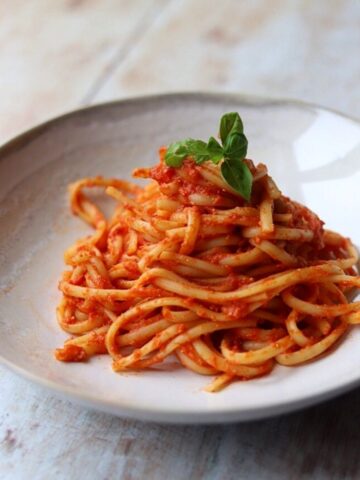
Stirred through pasta - toss with short pasta and a little of the cooking water, finished with torn basil and parmesan.
In a sandwich or burger - as a relish, particularly good with sausages or grilled chicken in a ciabatta.
With eggs - alongside fried or poached eggs, or baked into a shakshuka style dish.
With fish - the sweetness works beautifully with grilled or pan-fried white fish.
Make ahead and storing
This is also a great make ahead dish as the flavours really come together while resting.
Prepare in advance then store in an airtight container in the fridge for up to a week, the olive oil helps preserve the freshness, or in the freezer for up to 3 months.
FAQs
A classic Italian dish of bell peppers slow-cooked with onions, garlic and tomato until soft and sweet. It is served warm or at room temperature as an antipasto, side dish or pasta sauce.
Peperonata is good hot or cold. It is traditionally served at room temperature, which lets the flavours come through most clearly, but it is equally good gently warmed. It is rarely served piping hot.
Peperonata is Italian and pepper-based, with onion and tomato. Ratatouille is French and uses a broader mix of aubergine, zucchini, peppers, onion and tomato in roughly equal proportion.
No, slow cooking softens the skins and they are full of nutrients.
Fresh peppers are best when in season, as they will have the best flavour. Frozen peppers will work but they will release more water ansd the sauce will be runnier, while jarred roasted peppers are already soft and can work if you shorten the cooking time.
The peppers and tomatoes have released more liquid than they have reduced. Simply simmer uncovered for a few more minutes until the sauce thickens and clings to the peppers.
Yes, for up to 3 months. Cool completely, freeze in an airtight container, then thaw in the fridge. The texture softens slightly but the flavour holds well.
Yes, this recipe is naturally vegan and gluten-free.
You may also like ...
Recipe

Peperonata: Italian Sweet Pepper Stew
Ingredients
- olive oil 2 tablespoon
- garlic - sliced thin 4 cloves
- onions - sliced thin, red or white 2 medium
- bell peppers - (or approx. 600g) a combination of red, yellow, orange or green peppers 4 whole
- Italian tomato sauce - 1 cup, or canned tomatoes 230 g
- oregano ¼ teaspoon
- wine vinegar - red or white 1 tablespoon
- capers 1 tablespoon
- salt - adjust to taste ¾ teaspoon
- basil - garnish (optional) 4 leaves
- olive oil - for drizzling
Instructions
- Cut 4 whole bell peppers in half, remove the seeds and white pith, then slice the peppers into thin strips.
- In a medium saucepan, heat 2 tablespoon olive oil together with 4 cloves garlic till softened on medium-low heat.
- Add 2 medium onions sliced, increasing heat to medium and sauté till softened and translucent, but not brown.
- Add the sliced peppers then cover and cook for 15 minutes, stirring occasionally.
- Stir in 230 g Italian tomato sauce, ¾ teaspoon salt and add ¼ teaspoon oregano, then simmer uncovered on low heat for 15 minutes*, till the sauce has reduced.
- Turn off the heat and stir in 1 tablespoon wine vinegar and 1 tablespoon capers. Tear 4 leaves basil into quarters and stir them into the peperonata. Serve warm or at room temperature with a drizzle of good quality olive oil and some crusty bread.
Nicole's Notes
Only you will see your notes and you can edit them anytime.
Nutrition
Nutritional information calculated automatically per serving, accuracy cannot be guaranteed.
Sandy says
It may have a different name.. but I saute my veggies in meat sear… so so good.