

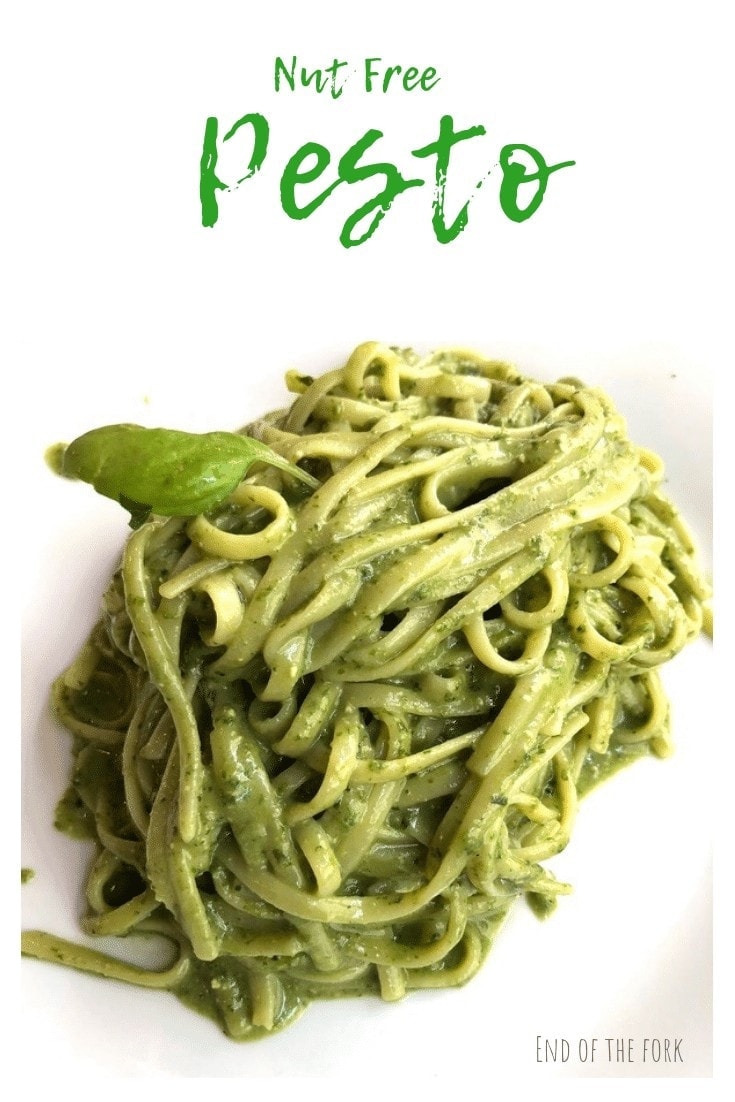
This nut free pesto is rich, creamy and simply wonderful! It is quick and easy to prepare, with the option to use a special ingredient!
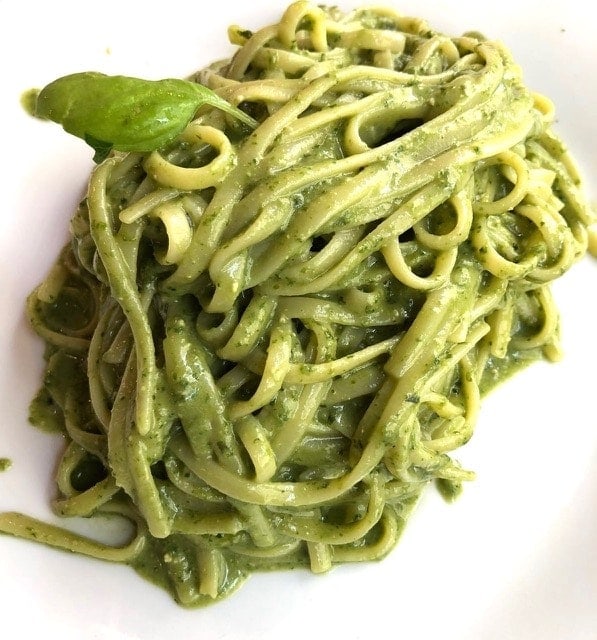
A freshly made pesto sauce is simply delicious, and the aroma it creates in the kitchen is heavenly!
This nut free version is creamy, full of fresh flavours and allergy friendly. The ingredients are blended together to create a wonderful depth of flavours and when mixed with warm pasta, the flavours absolutely bloom.
Are you looking for a recipe for pasta sauce? Check out our ricotta and tomato sauce, or try this Napolitana sauce with any shape pasta. If you need a sauce for garnishing or spreading, try this tangy Indian green chutney, a colourful cranberry sauce or this tasty guacamole.
Jump to:
From Roman times
Pesto has its origins in Roman times. Some food historians have traced pesto back to moretum, an ancient Roman paste of olive oil, garlic, herbs and cheese, with a surviving recipe recorded in the first-century agricultural text De Re Rustica.
The traditional basil pesto we know today is originally from Genoa in Liguria, this nut free version is not the traditional pesto alla Genovese.
Pesto Alla Genovese
Pesto Alla Genovese is a delicious uncooked sauce with concentrated flavours of basil, garlic and cheese, brought together with a mild olive oil. It is usually made with pine nuts which deliver a slight sweetness and creaminess. While the sauce itself doesn't hold official EU protection, the basil does. Genovese basil is the only basil in the world with DOP (Denominazione di Origine Protetta) status and the Consorzio del Pesto Genovese maintains a strict traditional recipe standard to protect the sauce's authenticity. So the classic recipe is now protected by the disciplinary consortium of Genovese Pesto.
Different versions of pesto
Different versions of this well loved sauce have since developed around Italy and beyond. There are pesto recipes which replace pine nuts with other nuts such as almonds or walnuts, while store bought pesto often contains cashew nuts.
Here are some versions you might find in Italy today:
- Pesto alla Trapanese (Trapani, western Sicily) - a fresh, delicate sauce Sicilians call 'agghiata trapanisa'. Traditionally made with almonds, tomatoes, and garlic; it developed after Genoese sailors brought their pesto to the port of Trapani, where locals adapted it with almonds and tomatoes instead of pine nuts and basil.
- Pesto Modenese (Emilia-Romagna) - a completely different style built on lardo (cured pork fat) crushed with Parmigiano Reggiano, garlic and rosemary or thyme. It is traditionally spread on bread or pizza rather than tossed with pasta.
- Walnut Pesto (western Liguria) - one of the few pesto styles made with milk, giving it a creamy texture. It is traditionally served with pansotti pasta on Sundays and religious fasting days like Christmas Eve and Lent.
- Pesto agli Agrumi / Citrus Pesto (Sicily) - the classic basil, pine nut and parmesan base, freshened with orange and lemon zest and juice, often paired with fish and seafood pasta.
- Marjoram Pesto (Liguria) - classically served with round corzetti pasta, a regional Ligurian specialty.
- Black Olive Pesto (Calabria) - olives, basil, sun-dried tomatoes, capers, and olive oil. It is closer to a rustic tapenade reflecting Calabria's status as a major olive-producing region.
- Calabrian Spicy Pesto - ricotta and Calabrian chillies. It is a sweet and spicy regional take inspired by Genovese but shaped by local peppers.
- Pesto alla Siciliana / Pesto Rosso (Sicily) - swaps pine nuts for almonds and adds fresh or sun-dried tomatoes, giving it a lighter, sweeter, reddish character.
Basil pesto without nuts
As we have a couple of nut allergy sufferers in the family, I was interested in making a nut free pesto without losing the sweet creaminess they give.
I discovered that Joe & The Juice have a nut free pesto sauce which works well in their sandwiches, so I thought I would try their version. They replace pine nuts with wait for it...a small amount of banana!
So I tried making a version at home using only a tiny bit of mashed banana (not very ripe as it is not being used for flavour). I have to admit, the sauce on its own does have a slight aftertaste, so I reduced the amount till was no longer discernible when spread in a sandwich or combined with roasted vegetables or meats. The mashed banana acts as a binder and lends a slightly sweet flavour and creamy texture, replicating the effect of pine nuts quite well.
The recipe below is based on the original pesto from Genoa but gives the options to replace pine nuts with banana if you're brave enough 😉
I realise adding banana isn't for everyone so you can leave it out, but it is worth trying.
How to serve it
Try this pesto with any of these:
- linguine
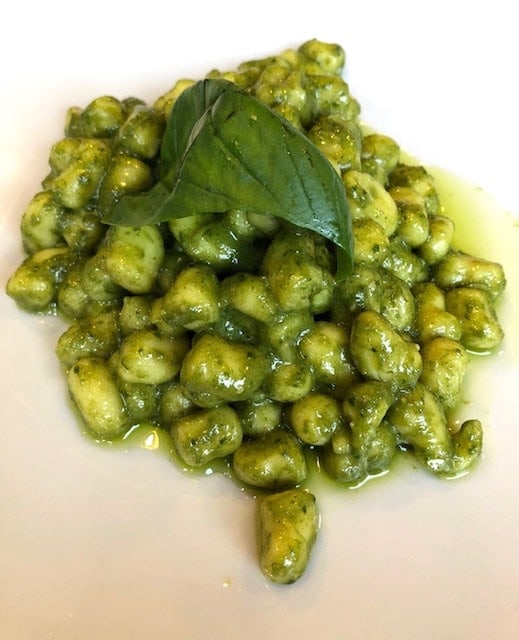
- potato gnocchi
- pasta with potatoes and green beans - Ligurian style
- tomatoes and mozzarella
- tomato sauce
- salads
- minestrone
- a dip for veggies
- grilled chicken or fish
- spread in sandwiches
- soups
Pestle and mortar vs blender
Pesto comes from the Italian pestare (to pound) and the traditional and preferred method of preparing pesto is to use a pestle and mortar.
Although it is more time consuming than using a blender, you will have more control over your ingredients to adjust quantities according to taste. The manual grinding process gives the pesto a more interesting uneven and satisfying texture which coats the food well. Pesto made this way also tastes creamier, has better colour and will stay fresh longer.
A blender is the most convenient method for grinding the ingredients if you are making a large amount or if you are short on time. Blend on a medium-low setting in short pulses, as a high setting/long pulses creates too much heat, turning the leaves black and losing flavour.
Which pestle and mortar is best?
Pestles and mortars are made in a variety of different materials such as stone (marble, granite), ceramic, wood, metal (cast iron, copper), or terracotta.
In Italy, a marble mortar and wooden pestle is the traditional for making pesto. The marble keeps the basil leaves cool and the wooden pestle not too heavy. The materials are perfect for crushing the delicate leaves to extract their oils, rather than pounding them to slime! The slow grinding releases the wonderful aromas of garlic and basil leaves.
Choose a mortar with a bowl large enough to accommodate enough leaves, and a pestle big and round to crush and blend the ingredients together.
Helpful tips
Follow these helpful tips for a delicious, creamy pesto with rich, deep flavours!
- Choose small, fresh, undamaged basil leaves. Rinse them in cool water, then wipe dry, taking care not to crush them.
- Crush the garlic with a just a pinch of salt (as the cheeses are salty).
- Grind the basil using light circular motions, pressing into the sides of the walls, cutting up the leaves and releasing the oils.
- Use a good quality, mild olive oil to bring together all the flavours and make a creamy sauce.
Storing
Fresh pesto always has the best flavour, but will keep in an airtight container for a couple of weeks in the fridge.
Pesto will darken on exposure to air, so store it submerged under a thin layer of oil.
The banana (if using) reduces the amount of time it can be stored in the fridge.
Fresh pesto (with or without banana) can also be frozen in ice cube trays then stored in zip-loc bags.
FAQs
This recipe contains parmesan and pecorino which contain animal rennet. To make it vegan you could experiment with a plant-based hard cheese alternative and nutritional yeast for a similar salty depth.
Use 1 tablespoon of mashed banana (not very ripe as it is not being used for flavour), to add creaminess without an overpowering banana flavour.
I'd love to know how yours turned out, let me know in the comments below or on Instagram @endofthefork
Recipe

Nut Free Pesto
Ingredients
- olive oil - (120 mls) ½ cup ½ cup
- basil - (40 grams) small fresh leaves 2 cups
- garlic 2 cloves
- Parmesan Reggiano cheese - freshly grated 3 tablespoons
- Pecorino sardo cheese - (aged) freshly grated 2 tablespoons
- sea salt - adjust according to taste ½ teaspoon
- mashed banana - (optional) 1 tablespoon
Instructions
- 2 cups basilWash the 2 cups basil taking care not to damage them, then pat dry with a kitchen towel.
- 2 cloves garlic, ½ teaspoon sea saltUsing a pestle and mortar, crush the 2 cloves garlic and ½ teaspoon sea salt to a paste.
- 1 tablespoon mashed bananaAdd a few basil leaves at a time, grinding in a light, circular motion, till all the leaves have been cut to small bits.
- 3 tablespoons Parmesan Reggiano cheese, 2 tablespoons Pecorino sardo cheese, ½ cup olive oilWhisk in ½ cup olive oil till creamy, then add the cheeses 3 tablespoons Parmesan Reggiano cheese and 2 tablespoons Pecorino sardo cheese. Mix in 1 tablespoon mashed banana if using.
Nicole's Notes
- Blend in short pulses, stopping to push down the leaves every so often, till it becomes a paste.
- Spoon out into a bowl/jar, and stir in the banana and cheeses, then mix in the oil.
- To serve with pasta, mix in a little of the starchy pasta water to combine it well.
- Fresh pesto always has the best flavour, but will keep in an airtight container for a day or two in the fridge.
- Pesto will darken on exposure to air, so make sure there is a layer of oil covering the pesto before sealing and storing in the fridge/freezer to prevent oxidation.
- Blend with 1 tablespoon banana for extra creaminess, but this will reduce the amount of time it can be stored in the fridge.
- Pesto can also be frozen in ice cube trays, and stored in freezer bags.
Only you will see your notes and you can edit them anytime.
Nutrition
Nutritional information calculated automatically per serving, accuracy cannot be guaranteed.
Sam says
Am I crazy - I can’t see how much banana to use in your ingredient list?
Nicole Shroff says
Oh yes, it's in the recipe notes: 'Blend with 1 tablespoon banana for extra creaminess, but this will reduce the amount of time it can be stored in the fridge'.
Stefano says
The nuts (pine nuts, by the way) taste like nuts. Bananas taste like bananas. It really is that simple.
Nikole says
I have many friends allergic to nuts, so I'm saving this for them!
Nicole says
Thanks Nikole, do let me know how they like it.
Beth says
Holy cow! The use of the banana is pure genius! What even made you think of that! Such a great idea for folks with nut allergies!
Nicole says
Haha Beth, thanks! a little banana contributes greatly to the creaminess, while the garlic overpowers any banana flavour (just don't use a very ripe banana 🙂
Alexis says
Oh goodness, there isn't much more that I love than fresh pesto. It smells and tastes amazing. Your recipe looks great!
Nicole says
Thanks Alexis, this pesto is perfect for spreading in sandwiches too.
Lesli says
I never thought that pesto actually needed the nuts, even though it does taste good. But I bet this tastes just as good! Love it!
Nicole says
Thanks Lesli, the nuts add to the creaminess, and in this case, so does the banana.
Grainne says
This looks amazing, I'm definitely going to give it a go- one of my in-laws has a nut allergy so this would be great for them. Thank you for posting.
Nicole says
Thank you Grainne, the banana replicates the creaminess of the nuts so well. I hope they enjoy it!