

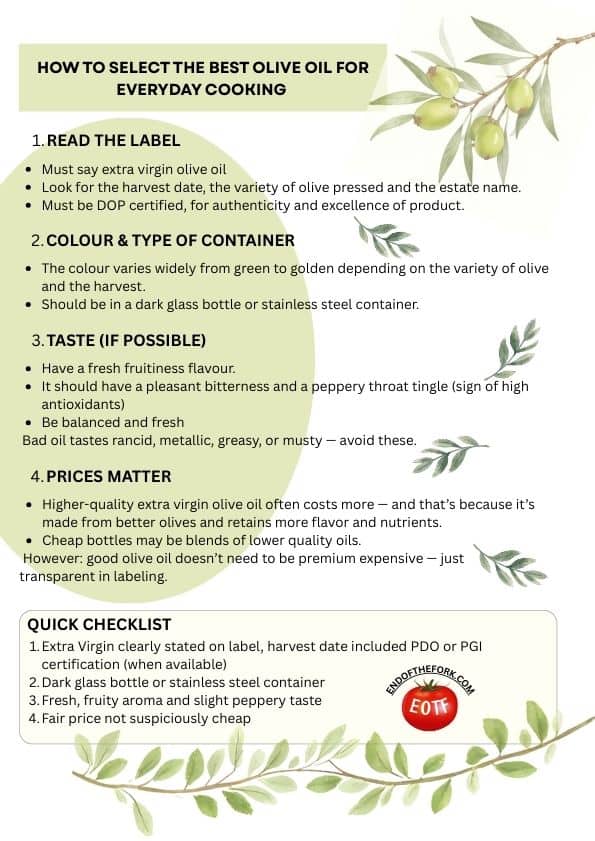
Learn how to pick high quality extra virgin olive oil with easy label tips, flavour notes and storage advice – for cooking, salads and health.
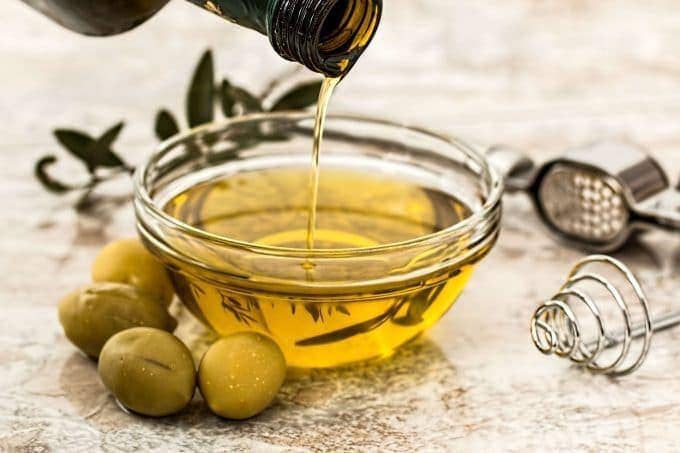
Olive oil is one of the healthiest cooking oils and essential to Italian cuisine but with so many adulterated olive oils on the market how do you know what is pure olive oil?
Good quality and fresh ingredients are an important part of Italian cooking and often determine the success of a dish. Italian cooks usually have a good knowledge of ingredients and are very particular in selecting the best quality for flavour and nutritional value.
However it is thought around half of what is labeled as extra virgin olive oil is in fact combined with oils from other countries.
EU laws maintain that as long as an oil is packaged in Italy it can be marked as ‘Made In Italy’, ‘Imported from Italy’ or ‘bottled in Italy’, so its important to know how to select a good olive oil.
Picking a good quality olive oil is as important for flavour as it is for your health. This article explains what to look for when selecting a good olive oil.
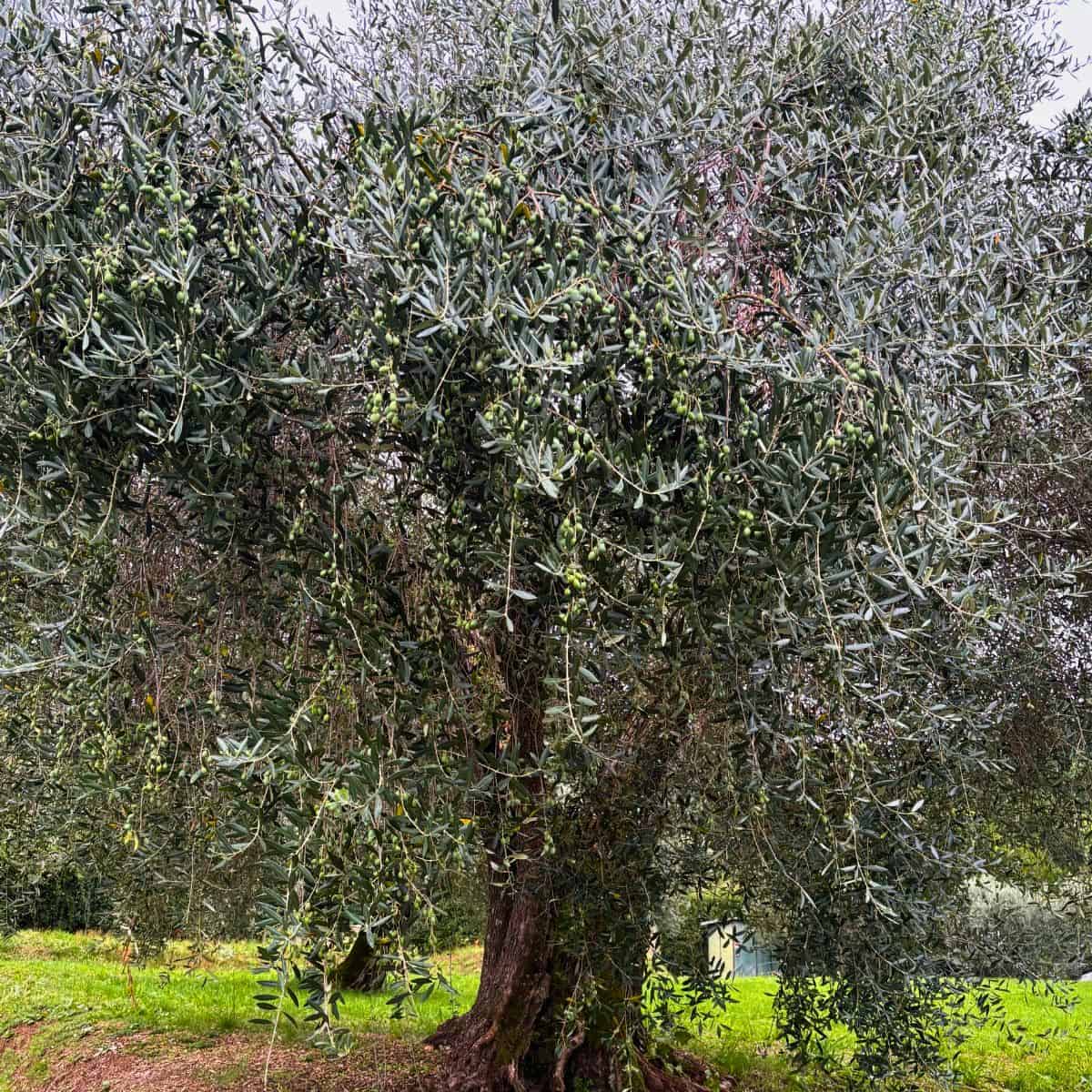
Read more: An Evening Of Italian Olive Oil Tasting
Click on the Subscribe button above to get more articles like this to your inbox.
Jump to:
- What is extra virgin olive oil good for?
- How to cook with olive oil
- Why Extra virgin olive oil is good for you
- Where to find a good extra virgin olive oil
- Steps to selecting a good extra virgin olive oil
- Does the price make a difference?
- How do you store olive oil?
- Quick Guide – 4 Easy Steps To Select The Best Olive Oil
- Reviews
What is extra virgin olive oil good for?
A good quality olive oil is usually served ‘raw’, adding delicious flavour when drizzled over dishes such as:
- soups (Italian red pepper soup)
- bruschetta
- pastas (pasta con fagioli)
- salads (Italian tomato salad)
- sauces (pesto)
- vegetables (sautéed green beans with garlic)
- grilled meats
- fish (tuna and bean salad)
How to cook with olive oil
Olive oil can be heated to make sauces, cook meats, poultry, fish, make bread and even prepare desserts (see our yummy apple polenta cake made with olive oil).
High quality olive oil is low in free fatty acids and therefore it has a higher smoke point and can be used for light frying. It has a smoke point of 190℃ – 210℃ (375℉ – 410℉), so it is suitable for most home cooking such as sautéing, light frying and cooking at temperatures up to 210℃ (410℉).
To fry at higher temperatures you will need an oil with a higher smoke point such as refined avocado oil (choose a trusted brand for a pure oil) which has a higher smoke point of around 270℃ (520℉).
The smoke point is the temperature at which a heated oil begins to break down chemically, smoke and burn, releasing harmful compounds, bitter flavours and spoiling the ingredients.
Why Extra virgin olive oil is good for you
Olive oil is high in monounsaturated fats (a healthy dietary fat), with high levels of antioxidants, anti inflammatory properties and can help promote a healthy gut.
Researchers claim olive oil can help reduce harmful cholesterol (lowering the risk of heart disease), and can help stabilise blood sugar levels.
There is also the suggestion from the University of Florence, that olive oil might help improve cognitive functioning.
Where to find a good extra virgin olive oil
Using modern technology combined with important traditions in methods of cultivation, Italy still leads in producing some of the world’s best olive oil.
Good quality olive oil can be found at reputable stores who are mindful of sourcing their products. These stores often offer the option to taste the oil before you buy.
The following tips will help you select a good quality olive oil.
Steps to selecting a good extra virgin olive oil
There are many different types of extra virgin olive oil depending on the cultivar, age of the olive at harvest, altitude, when harvested and how the olives are pressed.
How to read an olive oil label
Step 1: Read the wording on the label
Look for high quality, cold pressed ‘extra virgin olive oil‘ on the label. Do not select anything labelled as ‘pure’, ‘virgin’, or just ‘olive oil’.
- Extra virgin olive oil is the highest grade and is extracted without the use of solvents or refining methods. It has a smooth and superior flavour, with less than 0.8% acidity.
- Virgin olive oil has a higher acidity at 2%.
- Pure olive oil (which is a refined oil), has an even higher acidity higher at 3.3%.
But this tip alone is not sufficient as many oils labelled extra virgin are prepared using chemicals and are even diluted with cheaper vegetable oils. They will not have the same nutritional value or delicious flavour as varieties of olive oil which have passed certification.
Step 2: Origin and authenticity of the olive oil
Look for the harvest date, the variety of olive pressed and the estate name.
A good quality oil (as you might have seen on bottles of Italian wine), will have the marks DOP Denominazione d’Origine Protetta (Protected Designation of Origin) and PGI (Protected Geographic Origin).
The DOP label proves certification and authenticity, protecting against imitation, and ensures that the olive oil is produced, processed and packaged in a specific geographical zone according to tradition. Every step, from production to packaging, is regulated to a high standard and excellence of product.
What colour should extra virgin olive oil be?
Colour is not a good indicator of quality in olive oil as colour can vary between varieties.
Olive cultivars used for high quality oils can produce oils from shades of yellow to a deep green, while a younger freshly pressed olive oil might appear cloudy.
What is the best container for olive oil?
Olive oil should be stored in dark glass bottles or stainless steel containers to protect the oil from UV rays.
Olive oil will spoil and become rancid if left exposed to oxygen, light or heat so it should be stored in a container which can be closed properly.
What should a good extra virgin olive oil taste like?
Some stores allow you to taste the olive oil before you buy in which case you should be able to select a suitable extra virgin olive oil suited to your requirements.
A high quality young (freshly harvested) olive oil should be equally balanced in:
- Fresh and fruitiness – the fruitiness can be light, medium or intense depending on the DOP region. Notes can include: green olive, artichoke, fresh grass, tomato leaf and almond or apple.
- Have a pleasant bitterness – especially for oils made from early harvest olives indicating freshness and high polyphenol content.
- A pungency – Oleocanthal is a powerful polyphenol in extra virgin olive oil with powerful anti inflammatory and antioxidents properties. Tasting a young high quality olive oil on its own can create a slight to noticeable peppery tingling sensation in the throat and cause a gentle cough.
A high quality aged pressing of extra virgin olive oil will taste different from a young oil. Typically a well aged extra virgin olive oil should have these characteristics:
- Softer fruity notes – such as almond, dried apples or sweet herbs, and fewer sharp green notes such as grass and artichoke.
- Less bitterness – it should taste gentler and smoother.
- Less pungent – less peppery sensation, more balanced.
High quality young and aged olive oils should NOT taste moldy, rancid, metallic or greasy.
Does the price make a difference?
A good quality extra virgin olive oil is more expensive than an olive oil made from a blend of cheaper oils from different parts of the world.
However it is absolutely worth it for the superior taste (especially important when used raw on salads and drizzling over meats and vegetables), plus the higher nutritional content and health benefits.
How do you store olive oil?
Keep bottles of olive oil closed or sealed to prevent oxidation and store in a cool, dark place.
Decant small quantities at a time to use on a regular basis to prolong the freshness of the stored oil.
A good olive oil should have a wonderful fresh aroma and taste fruity, rich, pungent, bitter or nutty- depending on the cultivar. If the opportunity arises do taste before you buy.
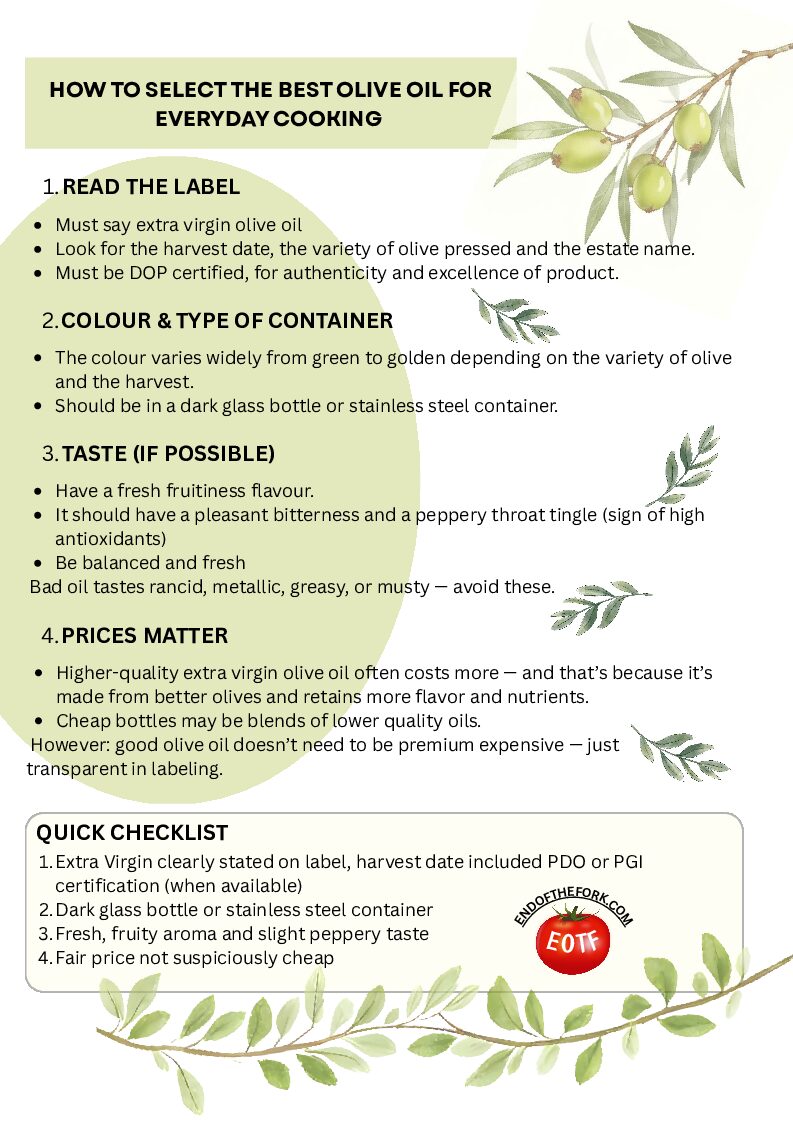
Quick Guide – 4 Easy Steps To Select The Best Olive Oil
Unlocking this Exclusive Content will give you access to a PDF file of our Quick Guide – To Select The Best Olive Oil. Once you sign up you will be able to access this file here and have access to all Exclusive Content on this site.
You may also like …

Find more useful tips for the home cook such as why its best to eat seasonally and why you should not overcrowd the pan.
Frank Ball says
I liked your tip of tasting the olive oil before buying it. My wife is wanting to improve her cooking skills and she was wondering how she can get the best olive oil available. I’ll be sure to tell her that she should taste potential olive oil before buying it.